Payday allowed
Borrowing in Alaska: What State Law Allows
Payday loans are still legal in Alaska after a 2025 bill to cap them at 36% was vetoed. Here is what payday and installment lenders may charge, and how state law protects you if a debt goes unpaid.
By Lendmira Editorial Team Updated 6 min read
- Payday loans
- Allowed, up to $500
- Payday fee cap
- $5 + $15 per $100
- Time limit to sue on debt
- 3 years
- Weekly pay exempt
- $473 or 75%
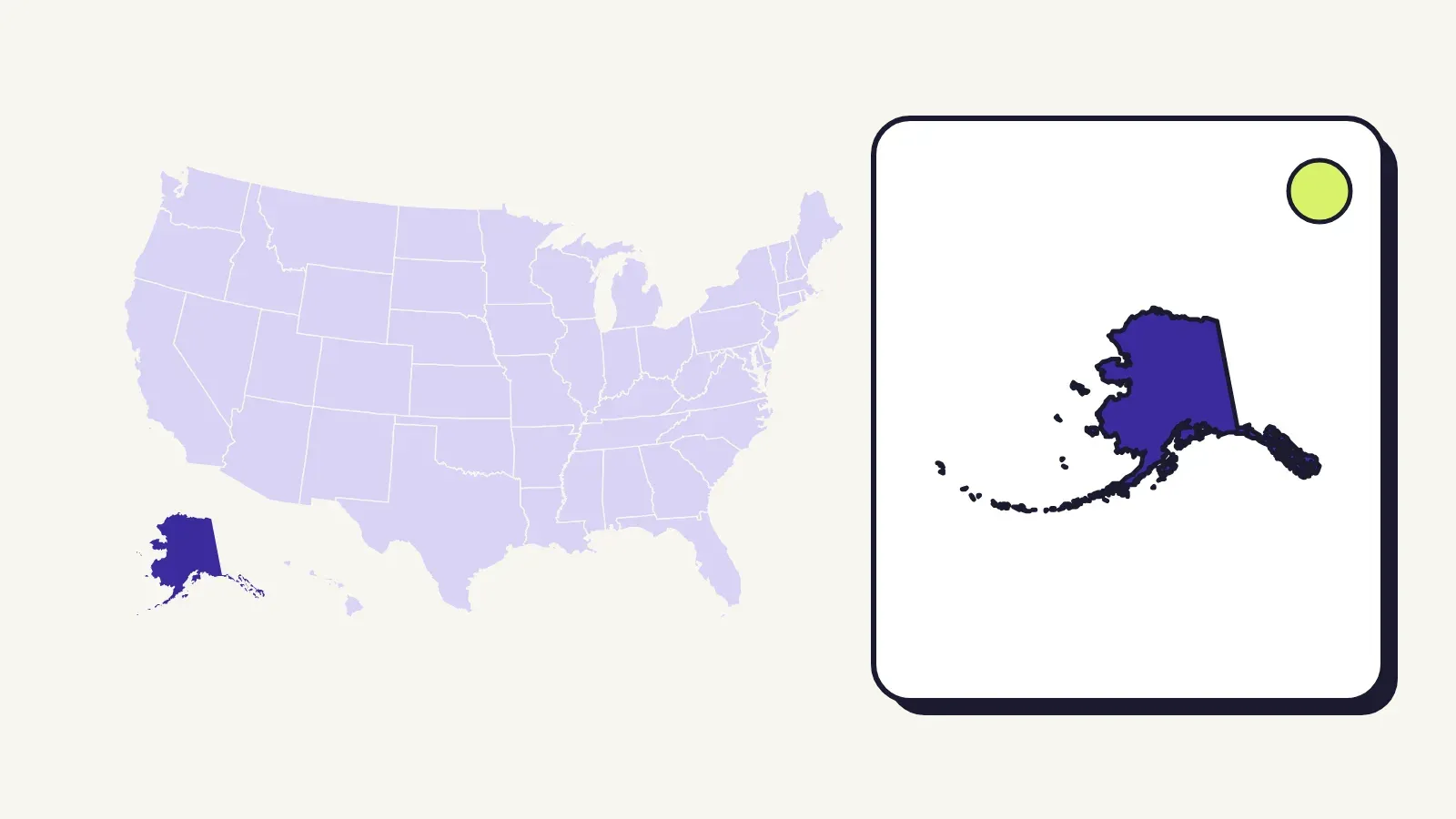
The short version
Alaska lets licensed lenders make payday loans, called deferred deposit advances, of up to $500 outstanding, for a $5 origination fee plus up to $15 per $100. On a $100 loan for 14 days that is about 521% APR. A 2025 bill to cap these loans at 36% was vetoed. Creditors generally have three years to sue, and $473 a week or 75% of your disposable pay, whichever is more, is protected from garnishment.
Alaska lending rules at a glance
Deferred deposit advances: the rules
A deferred deposit advance works like a payday loan anywhere: you write a check or authorize a debit, and the lender waits to cash it. Lenders need a license from the Division of Banking and Securities. Alaska Statutes chapter 06.50 sets the terms.
$500 outstanding
A licensee can't have more than $500 in advances out to you at one time, across all its locations.
$5 + 15%
A nonrefundable origination fee of up to $5, plus up to $15 per $100 advanced. No other fees are allowed.
14 days minimum
An advance must run at least 14 days. A renewal must also run at least 14 days.
Two renewals
No more than two renewals in a row. Then the full balance comes due.
Run the numbers before you sign. Borrow $100 for 14 days and you pay $20 in fees, about 521% APR. Borrow the full $500 and you pay $80, about 417% APR. The APR calculator shows what any offer works out to.
The 36% cap bill that was vetoed
In 2025 the Legislature passed Senate Bill 39, which would have moved payday lenders under the Small Loans Act and capped loans of $25,000 or less at 36% APR, fees included. Gov. Mike Dunleavy vetoed it on June 24, 2025. As of October 2026 the legislative record shows no override, so the payday rules above still apply.
The Division of Banking and Securities reported 13 active deferred deposit licensees at the start of 2025, including websites and a mobile app. If you're short on cash, check the alternatives to payday loans, such as a small-dollar loan from a credit union.
Installment loans under the Small Loans Act
Licensed lenders making consumer loans of up to $25,000 follow the Alaska Small Loans Act. The Division says the act also covers out-of-state lenders with no physical presence in Alaska when the borrower is in the state. Interest is capped in tiers:
| Part of the balance | Monthly cap | Yearly equivalent |
|---|---|---|
| Up to $850 | 3% | 36% |
| $850 to $10,000 | 2% | 24% |
| $10,000 to $25,000 | Agreed by contract | No set cap |
Alaska has no law that authorizes car title loans at payday-style rates, so a small consumer loan secured by your car is held to the same tiers as any other loan under the act. For larger amounts, compare a standard personal loan on APR, not the monthly payment.
Three years to sue, and wages you keep
Alaska has one of the shortest time limits in the country. A creditor generally has three years to sue on a contract, written or not, under AS 09.10.053. That includes credit cards and payday loans. A payment or written acknowledgment can affect the clock, so read how statutes of limitations work before you respond to an old debt.
If a creditor wins a judgment, part of your pay is exempt. The court form lists these amounts:
- Automatic: $473 a week or 75% of weekly disposable earnings, whichever is more.
- Sole support of a household: $743 a week, if you file an affidavit.
- Non-residents: 30 times the federal minimum wage per week or 75%, whichever is more.
Checking a lender and complaining
- Check the license on the Division of Banking and Securities website or NMLS Consumer Access, especially for online lenders.
- Get the full cost in writing: amount, every fee in dollars, APR and due date.
- File a complaint with the Division if a lender overcharges, renews too often or misleads you. You can also complain to the CFPB, and read your rights with debt collectors.
Common questions
Are payday loans legal in Alaska?
Yes. Licensed lenders can advance up to $500 for at least 14 days, charging a $5 origination fee plus up to $15 per $100. A 2025 bill to cap them at 36% was vetoed.
Are title loans legal in Alaska?
Alaska has no law authorizing high-rate title loans. Consumer loans of up to $25,000 from licensed lenders fall under the Small Loans Act's rate tiers.
What is the statute of limitations on debt in Alaska?
Generally three years for contract debts, including credit cards, under AS 09.10.053.
How much of my wages can be garnished in Alaska?
$473 a week or 75% of your weekly disposable earnings, whichever is more, is exempt. If you alone support your household, you can claim $743 a week.
Sources
- Alaska Division of Banking and Securities — Small loan and premium finance licensing
- Alaska Division of Banking and Securities — Alaska Small Loans Act and out-of-state lenders
- Alaska Statutes § 06.50.460 — Deferred deposit advance fees (Justia)
- Alaska Statutes § 06.20.230 — Small loan interest (Justia)
- Alaska Statutes § 09.10.053 — Contract actions (Justia)
- Alaska Court System — Notice of garnishment and right to exemptions (CIV-530)
- State of Alaska online public notice — Proposed exemption amount changes (July 2026)
- Alaska Public Media — Gov. Dunleavy vetoes bill sharply limiting payday loans
Facts on this page were checked against these sources on October 13, 2026. The garnishment exemption amounts were under review in 2026; a court will apply the figures in effect when you file.
Keep reading
-
Loan type
Payday loan alternatives
Credit union PALs up to $2,000 at 28% APR or less, paycheck advances, payment plans and local help.
-

Debt help
Old debt and time limits
Most states give collectors 3–6 years to sue. What can restart the clock, and why it's not the 7-year credit rule.
-
State law
Washington
Payday loans up to $700 with fees capped at 15%; 8 loans a year; no title loans; 25% cap on consumer loans.