Payday banned
Borrowing in Arizona: What State Law Allows
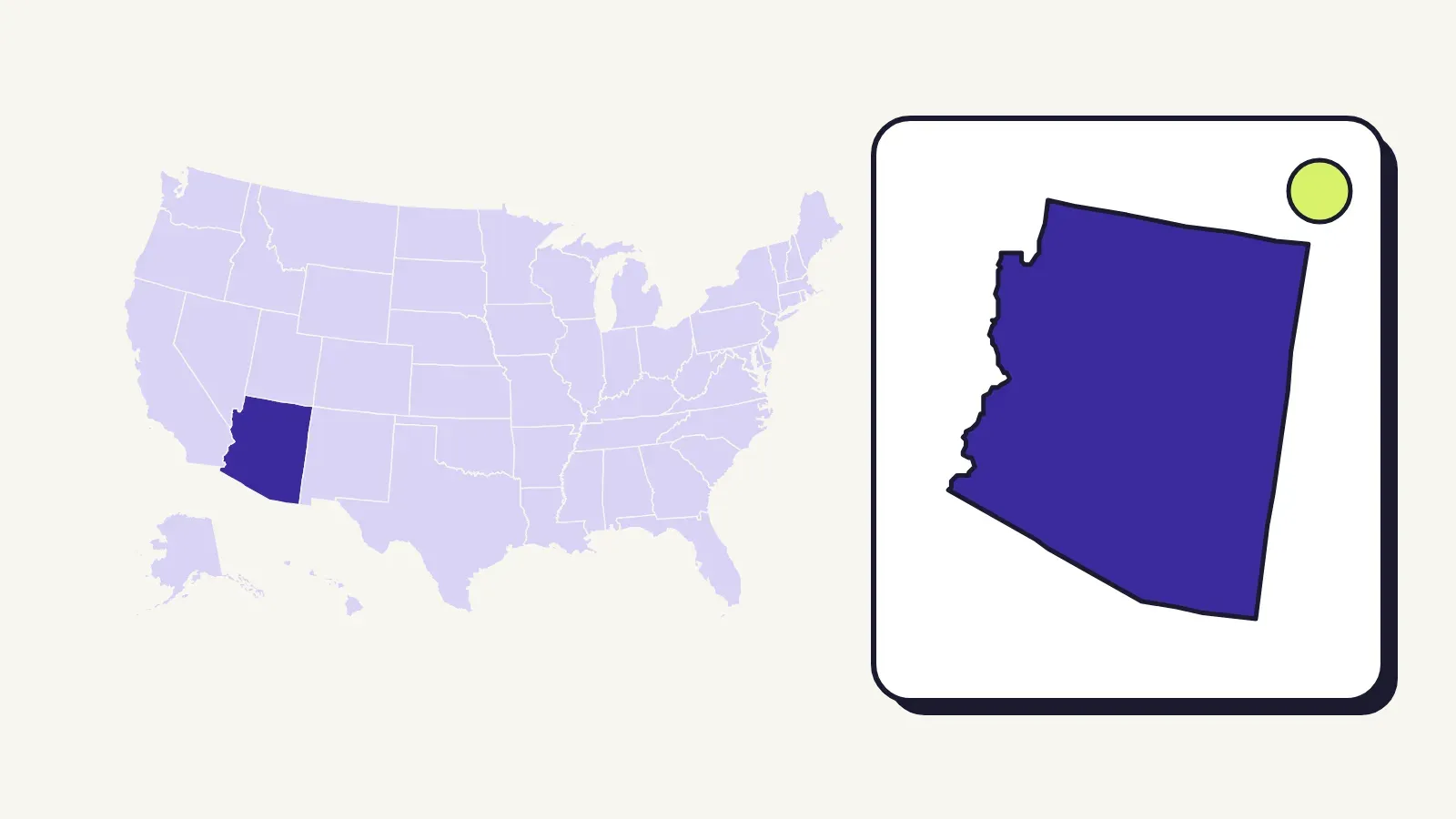
Payday lending has been illegal in Arizona since 2010, but car title loans are still legal and priced by the month. Here is what each kind of lender may charge, and how Arizona protects your paycheck if you fall behind.
By Lendmira Editorial Team Updated 6 min read
- Payday loans
- Not allowed since 2010
- Title loans
- Up to 17% a month
- Time limit to sue on debt
- 6 years
- Garnishment, consumer debt
- Up to 10% of pay
The short version
Arizona's payday loan law expired in 2010, and consumer loans above 36% a year plus allowed fees are now illegal. Car title loans are the exception: they can charge up to 17% a month on loans of $500 or less, which is 204% a year. Creditors have six years to sue on a written contract or a credit card, and garnishment for consumer debt is capped at 10% of disposable pay.
Arizona lending rules at a glance
Payday loans ended in 2010
The law that allowed payday loans in Arizona expired on June 30, 2010. The Department of Insurance and Financial Institutions (DIFI) no longer licenses payday lenders, and since July 1, 2010, consumer loans with annual interest above 36%, plus fees the law allows, have been illegal.
You may still see payday offers online. DIFI asks you to report payday loan advertising to the Arizona Attorney General at (866) 879-5219. An unlicensed lender asking for fees up front is a warning sign, so read about common loan scams before you share bank details.
Small, short loans haven't disappeared; they just have to fit under the cap. Federal credit unions can charge no more than 18% APR on most loans, a ceiling the NCUA has extended through September 10, 2027. Licensed consumer lenders in Arizona top out at 36% on smaller balances. Either one costs a fraction of what a payday loan used to, and a payment plan with the company you owe may cost nothing at all.
Title loans are legal, and priced by the month
Loans secured by a car you already own are made as secondary motor vehicle finance transactions under A.R.S. 44-291. The law caps the finance charge by the original loan amount, stated as a monthly rate. The annual rate is simply twelve times the monthly one.
| Original loan amount | Monthly cap | Annual rate |
|---|---|---|
| $500 or less | 17% | 204% |
| $500.01 to $2,500 | 15% | 180% |
| $2,500.01 to $5,000 | 13% | 156% |
| Over $5,000 | 10% | 120% |
On a $1,000 loan at 15% a month, that's $150 in finance charges every month the balance stays at $1,000. Miss payments and the lender can repossess the car. Before you sign, ask for the total of all payments and compare it with the amount you actually receive. Pay attention to the loan size, too: a loan of exactly $500 can carry a higher monthly rate than a slightly larger one.
What licensed consumer lenders may charge
Finance companies licensed by DIFI as consumer lenders face a tiered cap under A.R.S. 6-632:
- 36% a year on loans of $3,000 or less.
- On bigger loans, 36% on the first $3,000 and 24% on the rest, or a single blended rate that produces the same total charge.
- Revolving lines follow the same 36%/24% split by credit limit.
- Points are generally banned, except up to 4% on loans of $5,000 or more secured by your home.
Banks, and lenders that partner with banks chartered in other states, may not be bound by these caps. Use the APR on the disclosure to compare, and check the monthly cost with the loan payment calculator.
Six years to sue, including credit cards
Arizona gives creditors six years to sue on a debt based on a written contract signed in the state, and the statute names credit card debt specifically, so there is no open-account question here. If another state's time limit conflicts, Arizona's six-year rule applies.
After six years, a collector may still ask you to pay but can't win in court if you raise the time limit. See how statutes of limitations work before you make a payment on an old debt.
A 10% cap on wage garnishment
For consumer debt, A.R.S. 33-1131 limits garnishment to 10% of your disposable earnings for the week, or the amount above 60 times the applicable minimum hourly wage, whichever is less. That's well below the federal 25% ceiling. Support orders and tax debts follow different rules.
Collectors must also follow federal rules. Read debt collectors and your rights.
Checking a lender and filing a complaint
- Look up the license on DIFI's website or NMLS Consumer Access.
- Get the costs in writing: the monthly rate, the APR and the total you'll repay.
- Complain to DIFI about a licensed lender, or to the Attorney General about illegal payday offers. You can also file with the CFPB.
Common questions
Are payday loans legal in Arizona?
No. Arizona's payday law expired on June 30, 2010, and consumer loans above 36% a year plus allowed fees have been illegal since.
Are title loans legal in Arizona?
Yes. They can charge up to 17% a month on loans of $500 or less, stepping down to 10% a month on loans over $5,000.
What is the statute of limitations on credit card debt in Arizona?
Six years. Arizona's statute covers written contracts signed in the state and credit card debt by name.
How much of my wages can be garnished in Arizona?
For consumer debt, no more than 10% of your weekly disposable earnings, or the amount above 60 times the minimum hourly wage, whichever is less.
Sources
- Arizona DIFI — What happened to the payday lenders DIFI used to license?
- A.R.S. 44-291 — Secondary motor vehicle finance charges (Arizona Legislature)
- A.R.S. 6-632 — Consumer lender rates and charges (Arizona Legislature)
- A.R.S. 12-548 — Six-year limit on contracts and credit card debt (Arizona Legislature)
- A.R.S. 33-1131 — Wage garnishment limits (Arizona Legislature)
- NCUA — Board extends federal credit union loan interest rate ceiling
Facts on this page were checked against these sources on October 13, 2026. Title loan caps depend on the original loan amount, so a smaller loan can carry a higher monthly rate.
Keep reading
-
Loan type
Payday loan alternatives
Credit union PALs up to $2,000 at 28% APR or less, paycheck advances, payment plans and local help.
-
Debt help
Loan scams
Upfront fees, gift card demands and fake collectors: how to spot loan scams and where to report them.
-
State law
New Mexico
36% APR cap on loans up to $10,000 since 2023 ended payday and title loans; 6-year limit on written contracts.