Payday allowed
Borrowing in Florida: What State Law Allows
Florida allows payday loans but caps their fees, limits you to one at a time and tracks every loan in a state database. Title loans are legal too, with interest capped by law.
By Lendmira Editorial Team Updated 7 min read
- Payday loans
- Allowed, up to $500
- Payday fee cap
- 10% + verification fee
- Title loan rate cap
- 30% a year
- Time limit to sue (written)
- 5 years
The short version
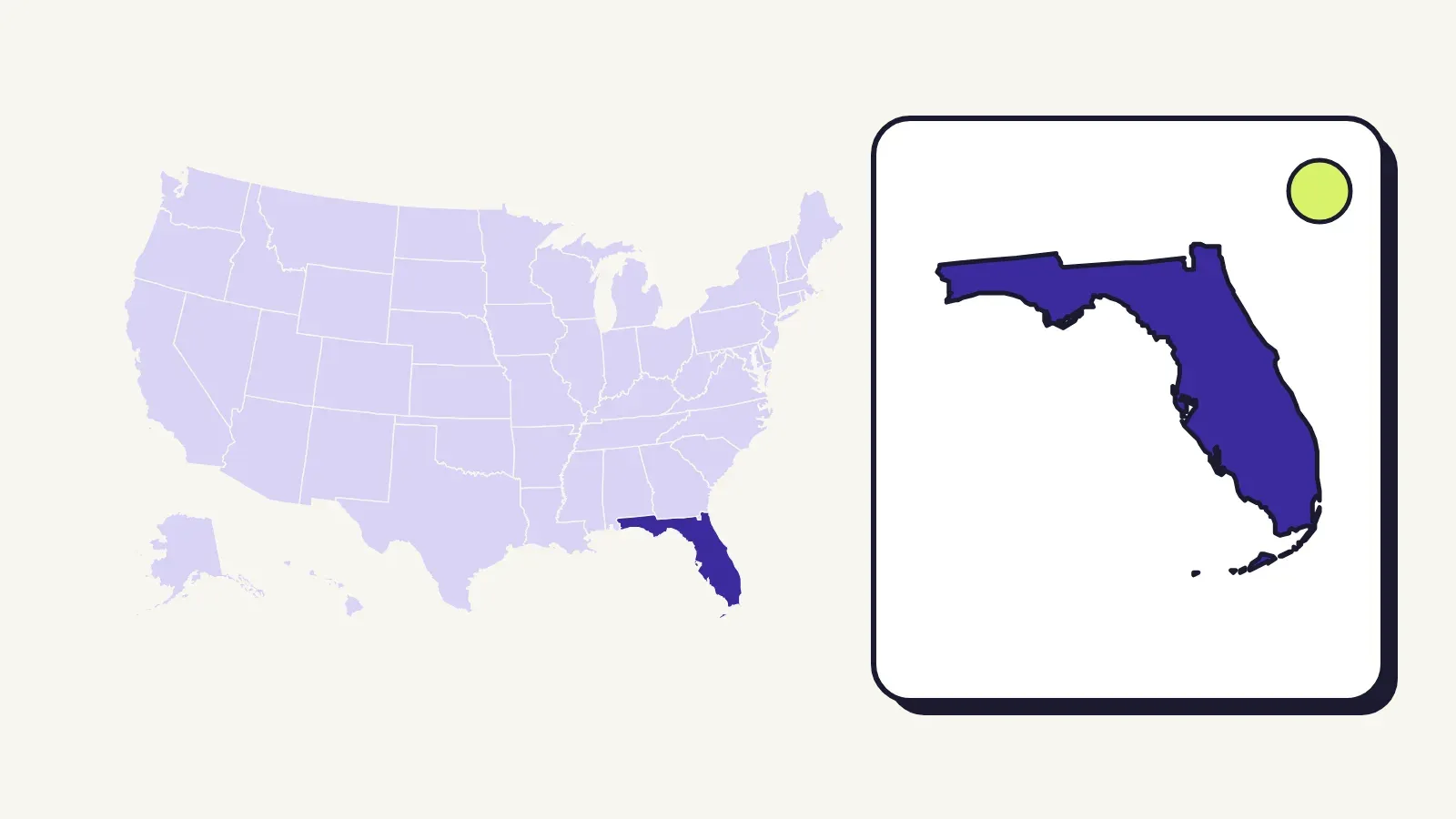
Florida's payday loans, called deferred presentment, can be up to $500 for 7 to 31 days with a fee of no more than 10% plus a small verification fee, or up to $1,000 in installments over 60 to 90 days. You can have only one outstanding at a time. Title loans are capped at 30% a year on the first $2,000. A creditor has five years to sue on a written contract, and heads of household earning $750 a week or less can't have their wages garnished.
Florida lending rules at a glance
Payday loans: two kinds, both capped
A Florida payday loan is a deferred presentment transaction: you write a check, or authorize a debit, and the provider agrees to hold it until your due date. Providers are licensed by the Office of Financial Regulation (OFR). Chapter 560, Part IV of the Florida Statutes allows two versions.
| Rule | Single payment | Installment |
|---|---|---|
| Maximum amount, excluding fees | $500 | $1,000 |
| Term | 7 to 31 days | 60 to 90 days |
| Fee cap | 10% of the amount, plus a verification fee | 8% of the outstanding balance every two weeks |
The cap still adds up. On a $500, 14-day loan, a $50 fee plus a $5 verification fee is $55, or an APR of about 287%. On the installment version, the 8% charge repeats every two weeks on what you still owe.
Guardrails that come with every payday loan
- One loan at a time. A provider can't lend to you if you have an outstanding deferred presentment loan with anyone, and every provider checks a real-time state database first.
- A 24-hour wait after you pay off one loan before you can take another.
- No rollovers. A loan can't be extended or paid off with a new one from the same provider.
- A 60-day grace period on single-payment loans if you tell the provider you can't pay. You must make an appointment with a consumer credit counseling agency within 7 days and finish the counseling within the grace period. No extra fees apply.
- No prepayment penalty. You can pay early without being charged for it.
Before you use any of this, see whether a payday loan alternative, such as a credit union small-dollar loan, can cover the gap for less.
Title loans: legal, at capped interest
Florida's Title Loan Act, Chapter 537, limits interest to simple annual rates that step down as the loan grows. Loans run 30 days and can be extended for more 30-day periods only if you and the lender both agree in a new signed agreement. The lender can't fold unpaid interest into the extension.
First $2,000
Up to 30% a year.
$2,000 to $3,000
Up to 24% a year on that portion.
Above $3,000
Up to 18% a year on the rest.
The rate cap doesn't remove the main risk: if you stop paying, the lender can take your car. That is the trade-off with any secured loan.
Installment loans: 36% on the first $10,000
Licensed consumer finance companies (Chapter 516) can lend up to $25,000. Interest is capped at 36% a year on the first $10,000, 30% on the part from $10,000 to $20,000, and 24% on the part from $20,000 to $25,000. These brackets were last changed in 2024. On top of interest, the law allows a short list of fees, including up to $25 for a credit investigation and a late charge of up to $15 on a monthly payment that is at least 12 days past due.
Banks chartered in other states can often lend at their home state's rates, so an online offer may not follow these caps. Compare the APR and total cost in each disclosure.
When a debt goes unpaid
A creditor has five years to sue on a contract founded on a written instrument and four years on one that isn't, under section 95.11. Which applies to credit card debt depends on what the creditor can prove: a signed agreement points to five years, while a suit on the account without one may fall under four. Plan around five unless a lawyer tells you otherwise. A separate three-year limit applies to certain hospital medical debt. Read how statutes of limitations work before you pay on an old debt.
Florida protects heads of household strongly. If you provide more than half the support for a child or other dependent, disposable earnings of $750 a week or less can't be garnished, and earnings above that can't be garnished either unless you agreed in writing. Those wages stay protected for six months after they land in your bank account, as long as they can be traced. Other workers get the federal limits.
Where to check a lender or complain
Check a payday, title or consumer finance license with the Office of Financial Regulation before you apply, and report a lender that charges more than these caps or ignores the database rules. You can also file with the CFPB.
Common questions
How much can you borrow with a payday loan in Florida?
Up to $500 on a single-payment loan or $1,000 on an installment loan, not counting fees. You can have only one outstanding at a time.
What is the maximum fee on a Florida payday loan?
10% of the amount on a single-payment loan, plus a verification fee of up to $5. Installment loans can charge up to 8% of the balance every two weeks.
Are title loans legal in Florida?
Yes. Licensed title lenders can charge up to 30% a year on the first $2,000, less on larger amounts, and can repossess the car if you default.
Can my wages be garnished in Florida?
Not if you are a head of household earning $750 a week or less after required deductions, unless you agreed in writing. Others are subject to the federal limit of up to 25% of disposable pay.
Sources
- Florida Statutes s. 560.404 — Requirements for deferred presentment transactions
- Florida Statutes s. 537.011 — Title loan agreements and interest rates
- Florida Statutes s. 516.031 — Consumer finance charges
- Florida Statutes s. 95.11 — Limitations other than for the recovery of real property
- Florida Statutes s. 222.11 — Exemption of wages from garnishment
- Florida Office of Financial Regulation — Deferred presentment providers
Facts on this page were checked against these sources on October 13, 2026. The 287% APR example is our own calculation from the statutory fee caps.
Keep reading
-
Loan type
Payday loan alternatives
Credit union PALs up to $2,000 at 28% APR or less, paycheck advances, payment plans and local help.
-
Debt help
Old debt and time limits
Most states give collectors 3–6 years to sue. What can restart the clock, and why it's not the 7-year credit rule.
-
State law
Georgia
Payday lending is a crime; title pawns allowed at up to 25% a month; 6-year limit on card debt suits.