Small loans allowed
Borrowing in Hawaii: What State Law Allows
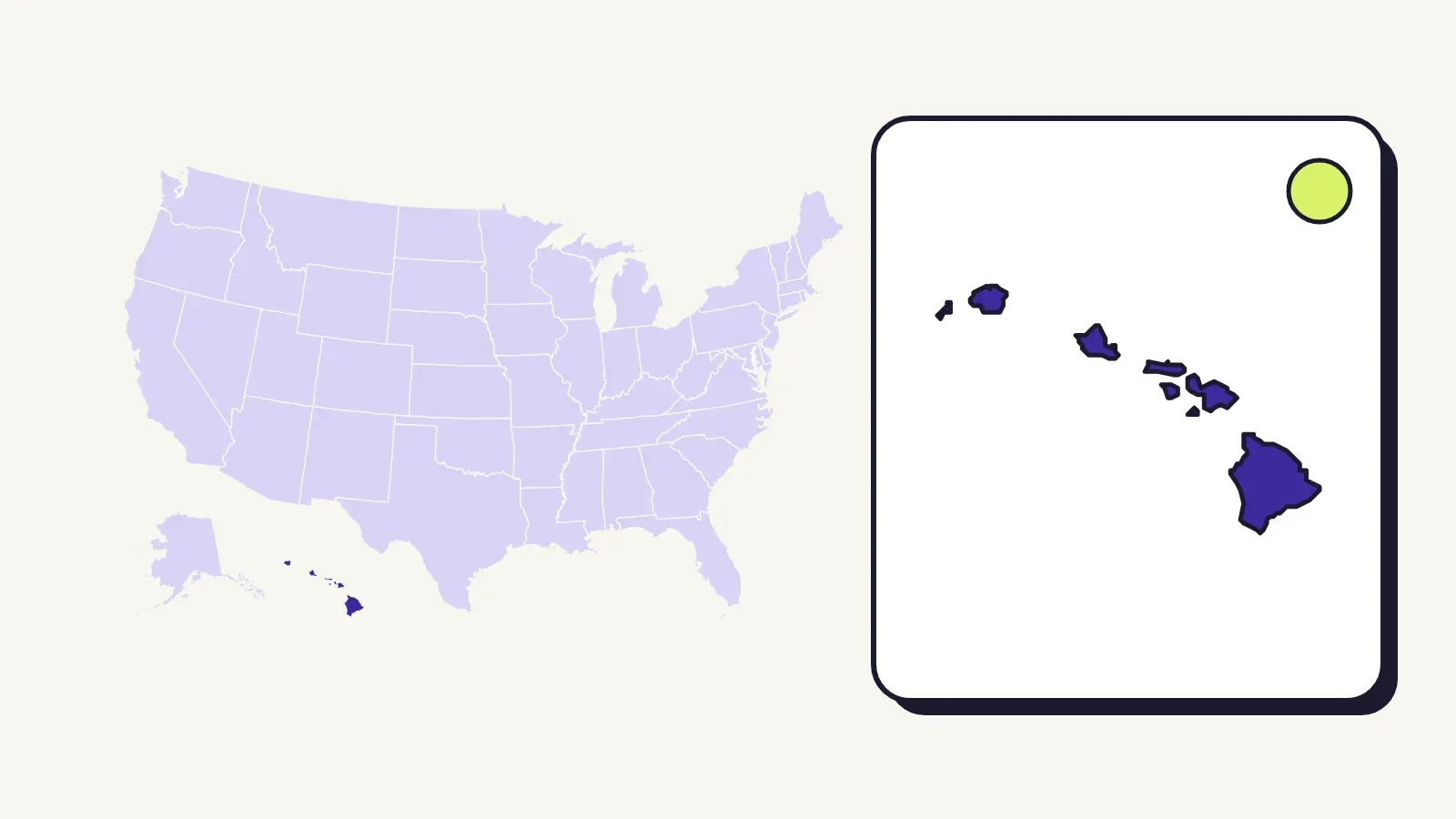
Since 2022, Hawaii has no payday loans in the old sense. Licensed lenders make small installment loans instead, with a 36% interest cap and a monthly fee that still makes short loans expensive.
By Lendmira Editorial Team Updated 6 min read
- Small-dollar loans
- Up to $1,500
- Interest cap
- 36% + monthly fee
- Total charges cap
- 50% of principal
- Time limit to sue on debt
- 6 years
The short version
Hawaii repealed payday (deferred deposit) lending and, from January 1, 2022, licenses installment lenders instead. They can lend up to $1,500 for 2 to 12 months at 36% interest, plus a monthly maintenance fee of $25 to $35, and total charges can't exceed half the amount borrowed. On a $500 two-month loan, that works out to an APR of about 130%. Creditors have six years to sue on a contract debt.
Hawaii lending rules at a glance
What replaced payday loans in Hawaii
Act 56 of 2021 created Chapter 480J of the Hawaii Revised Statutes, effective January 1, 2022. It ended deferred deposit transactions, the check-holding loans sold by payday stores, and created a license for installment lenders supervised by the Division of Financial Institutions (DFI) in the Department of Commerce and Consumer Affairs. A lender making these loans needs that license, and you can check it on NMLS Consumer Access.
| Maximum loan | $1,500, one loan at a time from a lender and its affiliates |
|---|---|
| Term | At least 2 months for $500 or less, at least 4 months above $500; no more than 12 months |
| Interest | Up to 36% a year on the unpaid balance |
| Monthly maintenance fee | $25 under $300; $30 from $300 to $699.99; $35 from $700 |
| All charges combined | No more than 50% of the amount borrowed |
| Origination fees | Not allowed |
In practice, that means you can no longer write a postdated check for a two-week loan and roll it over payday after payday. Every loan is now repaid in installments over at least two months, and a lender must take reasonable steps to make sure you don't already have another of its loans outstanding. The rules apply to storefront and online lenders that lend to Hawaii residents.
Why a 36% cap still costs more than 36%
The maintenance fee is charged on top of interest, and Hawaii's definition of APR counts it. On small, short loans that fee dominates the cost. These examples assume equal monthly payments, 36% interest and the maximum fee:
| Loan | Monthly payment | Total cost | APR |
|---|---|---|---|
| $500 for 2 months | $291.31 | $82.61 | About 130% |
| $1,000 for 4 months | $304.03 | $216.11 | About 100% |
| $1,500 for 12 months | $185.69 | $728.32 | About 80% |
The longest loan has the lowest APR but the highest dollar cost, which comes close to the 50% limit. Compare a credit union loan or another payday loan alternative first, and run any offer through the loan payment calculator.
Your rights on a Hawaii installment loan
- One renewal only. A loan can be renewed once; after that it must be paid off. Charges on the renewal are again capped at 50% of the renewed principal.
- Pay early, pay less. You can prepay, and you get a prorated refund of finance charges if a loan is renewed before it matures.
- Limited extra fees. A late charge of $30 is allowed once an installment is more than 10 days overdue, and paying by debit card can carry a fee of no more than $1.
- A right to rescind shortly after you sign, set out in the loan agreement.
No Hawaii statute specifically authorizes car title lending, and the state's general consumer credit law caps most other lenders at 12% a year, or 24% for licensed financial institutions.
Time limits and garnishment
A creditor has six years to sue on a debt founded on a contract, under HRS section 657-1. That covers loans and credit card debt. Check how statutes of limitations work before you make a payment on an old account.
Hawaii limits garnishment with a sliding scale on monthly wages after required withholding:
- 5% of the first $100
- 10% of the next $100
- 20% of everything above $200
On $3,000 of monthly take-home pay, that's $5 + $10 + $560, or $575 (about 19%). The federal limit also applies, and you keep whichever protection is greater. For collector rules, see debt collectors and your rights.
Before you sign, and where to complain
- Check the license on NMLS Consumer Access. An unlicensed lender offering a Hawaii loan is breaking the law.
- Ask for the total in dollars, not just the 36% rate: interest plus every monthly maintenance fee over the full term.
- Pick the shortest term you can afford. Each extra month adds another fee of up to $35.
- Compare cheaper credit. A federal credit union is held to an 18% APR ceiling on most loans through September 10, 2027.
Contact the Division of Financial Institutions if an installment lender charges more than the law allows, won't give you a payoff amount, or isn't licensed. DCCA takes complaints online, and you can also file with the CFPB.
Common questions
Are payday loans legal in Hawaii?
Not in their old form. Deferred deposit loans were repealed, and since 2022 licensed lenders offer installment loans of up to $1,500 over 2 to 12 months instead.
What is the interest rate cap on small loans in Hawaii?
36% a year, plus a monthly maintenance fee of $25 to $35. Total charges can't exceed half the amount you borrow.
How long can a creditor sue me for a debt in Hawaii?
Six years for debts founded on a contract, including most loans and credit cards.
How much of my wages can be garnished in Hawaii?
5% of the first $100 a month, 10% of the next $100 and 20% of the rest, after required withholding. The federal limit protects you if it is lower.
Sources
- Hawaii DFI — Learn more about installment lenders
- Hawaii DFI — 2021 new law on small dollar loans (Act 56)
- HRS § 480J-2 — Installment loans; requirements; payments
- HRS § 480J-4 — Authorized interest rate
- HRS § 657-1 — Limitation of actions, six years
- HRS § 652-1 — Garnishment of wages
Facts on this page were checked against these sources on October 13, 2026. The cost examples are our own calculations at the statutory maximums; a lender may charge less.
Keep reading
-
Loan type
Payday loan alternatives
Credit union PALs up to $2,000 at 28% APR or less, paycheck advances, payment plans and local help.
-
Debt help
Old debt and time limits
Most states give collectors 3–6 years to sue. What can restart the clock, and why it's not the 7-year credit rule.
-
State law
California
Payday loans up to a $300 check with a 15% fee; 36% plus fed funds cap on $2,500–$9,999 loans.