Payday allowed
Borrowing in Kentucky: What State Law Allows
Kentucky allows payday loans, which it calls deferred deposit transactions, and tracks every one in a statewide database. A 2026 law raised the dollar limit for the first time in years. Here is what that means for you.
By Lendmira Editorial Team Updated 6 min read
- Payday loans
- Allowed, up to $600
- Payday fee cap
- $15 per $100
- Consumer loan cap
- 3% a month up to $5,000
- Time to sue (written)
- 10 years
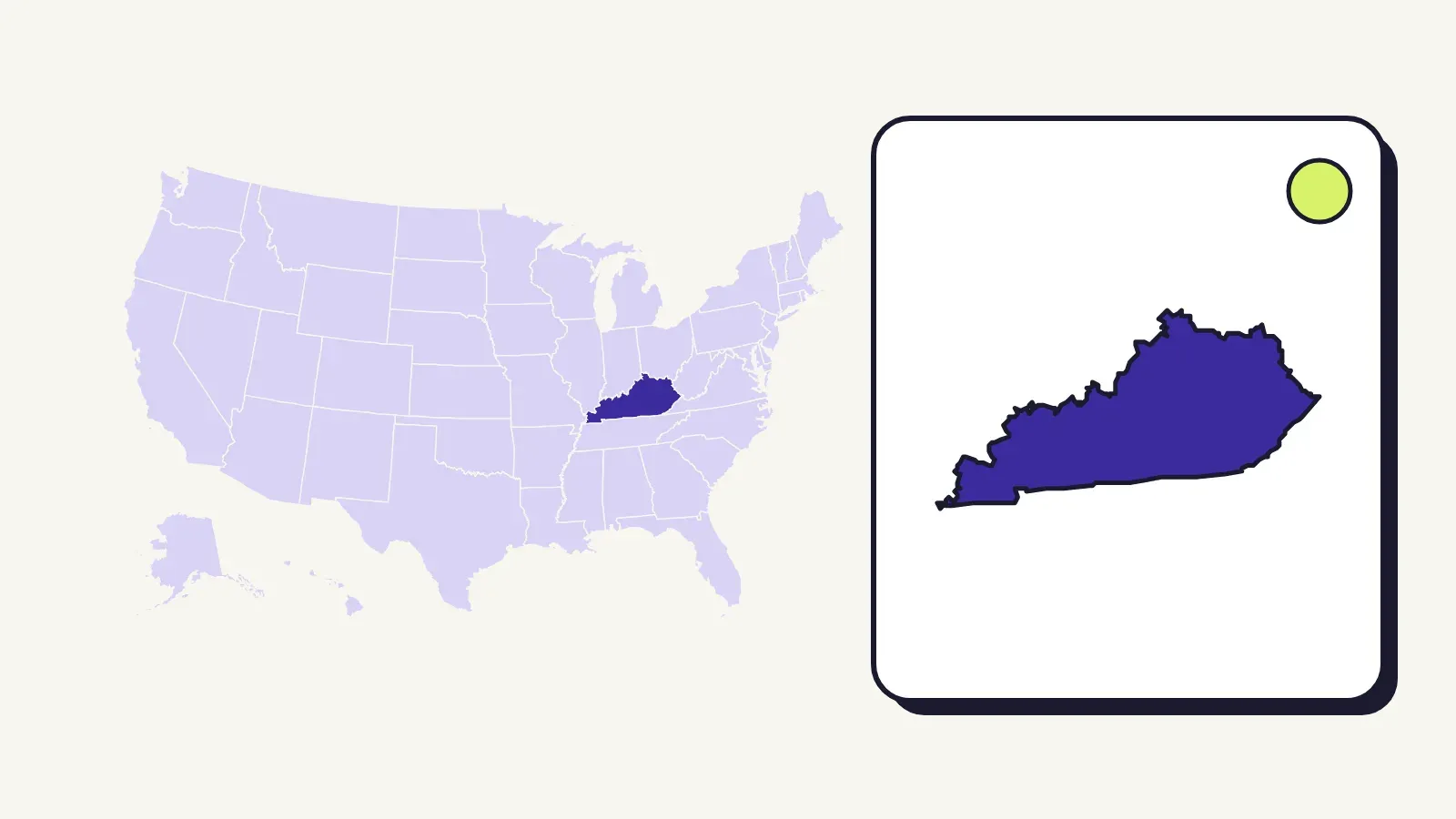
The short version
Kentucky payday lenders can charge up to $15 per $100 of the check, for 14 to 60 days, and you can have no more than two loans at a time. A law effective July 15, 2026, raised the total you can borrow across all open payday loans from $500 to $600, with yearly inflation adjustments up to $850. Licensed consumer loan companies can charge up to 3% a month on loans up to $5,000. Written contracts signed since mid-2014 can be sued on for 10 years.
Kentucky lending rules at a glance
Deferred deposit loans and the July 2026 change
A Kentucky payday loan works like this: you write a check, or authorize a withdrawal, for the loan plus the fee, and the lender agrees not to cash it until your next payday. The Department of Financial Institutions (DFI) licenses these businesses under KRS 286.9, and the main limits are in KRS 286.9-100:
- $600 in total proceeds from all your open payday loans, for loans made on or after July 15, 2026 (the limit was $500 before).
- Two loans at a time, across all lenders.
- A fee of no more than $15 per $100 of the check, covering a period of at least 14 days.
- The lender can hold the check for no more than 60 days.
- No rollovers: a lender can't renew or consolidate a loan for a fee.
Starting with an order due by July 1 each year, the DFI commissioner adjusts the $600 limit for inflation, rounded up to the nearest $10. The adjusted limit can never exceed $850.
Here is what the fee means in practice. A $300 check carries a fee of up to $45, so you'd receive $255. Over 14 days that's an APR of about 460%.
The statewide database enforces the limits
Every Kentucky payday lender must check a real-time state database, the Kentucky Deferred Presentment Transaction System, before making a loan. It's run for DFI by a contractor, and it is how a lender knows whether you already have two loans or have reached the dollar cap at another store. Kentucky has also stopped issuing new payday lender licenses, so only existing licensees can operate.
Installment loans and car title loans
Consumer loan companies, the storefront and online finance companies that make installment loans, are licensed by DFI under KRS 286.4. The maximum charges in KRS 286.4-530 are stated per month and depend on the original loan amount:
| Original principal | Monthly limit | Simple yearly equivalent |
|---|---|---|
| Up to $5,000 | 3% | 36% |
| $5,000.01 to $10,000 | 2.42% | 29.04% |
| $10,000.01 to $15,000 | 2.25% | 27% |
Beyond those charges, the lender can collect only a short list of extras, such as a late charge of up to 2% of an installment more than seven days overdue, recording fees and certain insurance premiums.
Kentucky has no law authorizing car title loans at payday-style prices. A loan secured by your car from a licensed consumer loan company falls under the limits above, and the pawnbroker law covers loans on property you hand over, not a title you keep driving on.
Time limits on lawsuits and what wages are protected
Kentucky's time limits depend on the contract. For a written contract signed after July 15, 2014, a creditor has 10 years to sue (KRS 413.160); for one signed before that, 15 years (KRS 413.090). A contract not in writing has a five-year limit under KRS 413.120.
Credit card debt is the gray area. Many card accounts have no signed agreement and are treated as unwritten, five-year debts, but a collector with a signed contract may claim the longer written-contract period. A card agreement that names another state's law can also bring that state's limit into play. Before you pay anything on an old debt, read how the statute of limitations works.
For wage garnishment, Kentucky uses the federal limit (KRS 427.010): a creditor can take no more than 25% of your weekly disposable earnings, or the amount above 30 times the federal minimum wage, whichever is less. Support orders, Chapter 13 bankruptcy orders and tax debts are not bound by that limit.
How to complain about a lender
- Check the license with DFI's licensee search or NMLS Consumer Access.
- Write down the details: the loan date, amounts, fees and any messages from the lender.
- File a complaint with DFI, whose Consumer Protection Branch handles complaints about payday lenders, check cashers and consumer loan companies. You can also file with the CFPB.
- Know your collection rights. See debt collectors and your rights if a collector contacts you.
Common questions
Are payday loans legal in Kentucky?
Yes. Licensed deferred deposit lenders can charge up to $15 per $100 for 14 to 60 days. You can have two loans at a time, and since July 15, 2026, up to $600 in total.
How much can I borrow with a payday loan in Kentucky?
Up to $600 in total proceeds across all open payday loans for loans made on or after July 15, 2026. The state adjusts the limit for inflation each year, up to a maximum of $850.
Are title loans legal in Kentucky?
No Kentucky law authorizes high-cost car title loans. A loan secured by your vehicle from a licensed consumer loan company is subject to the state's consumer loan rate limits.
How long can a creditor sue me in Kentucky?
Ten years on a written contract signed after July 15, 2014, and five years on an unwritten one. Credit card debt usually falls under the five-year rule, though a collector with a signed agreement may argue otherwise.
Sources
- KRS 286.9-100 — Deferred deposit transaction limits, as amended effective July 15, 2026
- Kentucky DFI — Deferred deposit and check cashing licensing
- KRS 286.4-530 — Consumer loan company interest and charges
- KRS 413.160 — Ten-year limitation, written contracts
- KRS 413.120 — Five-year limitation, contracts not in writing
- KRS 427.010 — Exempt property and disposable earnings
Facts on this page were checked against these sources on October 13, 2026. The $600 payday limit applies to loans made on or after July 15, 2026, and DFI may adjust it each year.
Keep reading
-
Loan type
Payday loan alternatives
Credit union PALs up to $2,000 at 28% APR or less, paycheck advances, payment plans and local help.
-

Debt help
Old debt and time limits
Most states give collectors 3–6 years to sue. What can restart the clock, and why it's not the 7-year credit rule.
-
State law
Tennessee
Payday loans with a 15% fee, title pledge loans up to $2,500 and flex loans near 280% APR; 6-year limit.