Payday banned
Borrowing in Maryland: What State Law Allows
Maryland keeps rates on small loans low enough that payday and car title lenders can't operate legally, and a loan that breaks the rules can't be collected at all. Here are the limits and your rights if you fall behind.
By Lendmira Editorial Team Updated 6 min read
- Payday loans
- Not legal
- Small loan rate cap
- 33% a year
- Time to sue on debt
- 3 years
- Weekly pay protected
- At least $450
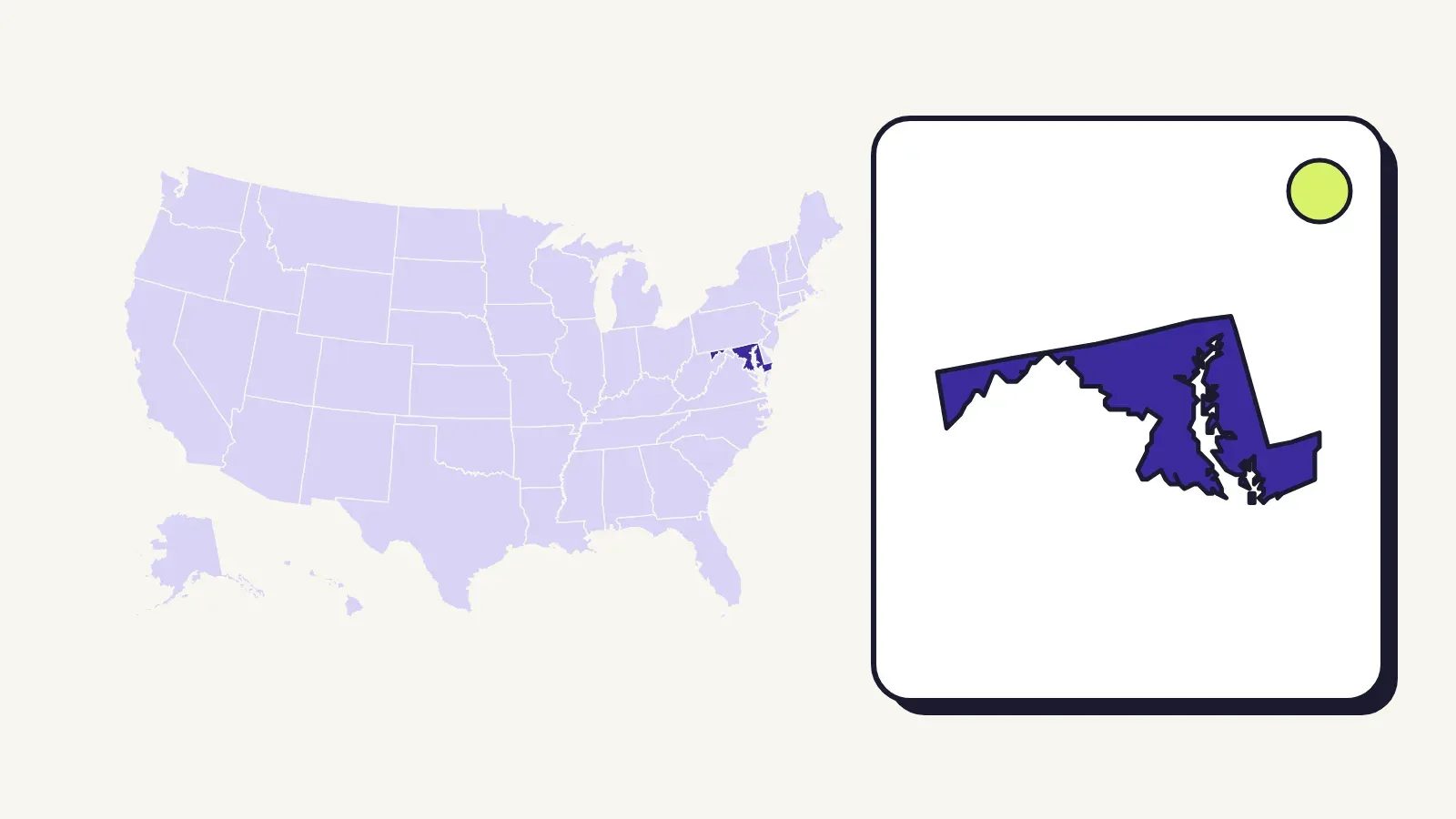
The short version
Maryland limits consumer loans of $25,000 or less to the rates its Consumer Loan Law allows: 2.75% a month (33% a year) on the first $1,000 of a loan of $2,000 or less, and 24% above that. That rules out payday and car title loans, and a loan that charges more, or comes from an unlicensed lender, is void and unenforceable. Most debts must be sued on within three years, and Maryland protects the greater of 75% of your take-home pay or 30 times the state minimum wage each week.
Maryland lending rules at a glance
No payday or title loans, by design
Maryland has no law authorizing payday loans or car title loans. Instead, most consumer lenders must be licensed by the Commissioner of Financial Regulation and stay within the Maryland Consumer Loan Law's rate limits. A two-week loan with a fee of $15 per $100 works out to an APR near 400%, more than ten times what the law allows.
The penalty for breaking the rules is strong. Under section 12-314 of the Commercial Law Article, a loan of $25,000 or less is void and unenforceable if it charges more than the law allows, if the lender should have been licensed and wasn't, or if it violates the federal Military Lending Act. The lender can't collect any principal, interest or fees, can't take property that secures the loan, and can't sell the loan to someone else.
How the 33% cap is calculated
The Consumer Loan Law states its limits as monthly rates on the unpaid principal. It contains an older schedule and an alternative one for loans made on or after July 1, 1982; the alternative schedule, which sets the higher limits, is:
| Loan | Monthly rate | Yearly rate |
|---|---|---|
| First $1,000 of a loan of $2,000 or less | 2.75% | 33% |
| Rest of a loan of $2,000 or less | 2% | 24% |
| Loan over $2,000 (whole balance) | 2% | 24% |
On a $1,500 loan, the first $1,000 can carry up to 33% and the remaining $500 up to 24%. If principal is still unpaid six months after the loan matures, the rate drops to no more than 6% simple interest a year.
These are ceilings. With fair or better credit you may find lower rates; see how personal loans work and how to compare offers. For a short-term cash gap, look at payday loan alternatives, including credit union loans.
The three-year clock on debt
In Maryland, a civil action generally must be filed within three years after it accrues (Courts and Judicial Proceedings section 5-101). That covers most credit card debt, personal loans and written contracts. A 12-year period applies to specialties such as sealed contracts and sealed promissory notes (section 5-102), so check whether your agreement was signed "under seal."
Maryland goes further than federal law once the clock runs out. Under section 5-1202, a creditor or collector may not file a consumer debt collection lawsuit after the limitations period expires, and a payment, a promise to pay or any other activity on the debt afterward does not revive it. A separate payment agreement signed before the deadline is the exception.
Read how statutes of limitations work before you respond to a collector about an old account.
Wage garnishment in Maryland
Commercial Law section 15-601.1 protects the greater of 75% of your disposable wages or 30 times the state minimum hourly wage for each week the wages were earned. With Maryland's minimum wage at $15 an hour, that's at least $450 a week that a creditor can't touch. Federal law uses the lower federal minimum wage, so Maryland's floor is higher.
Getting help from the Office of Financial Regulation
- Check the license on NMLS Consumer Access or the Office of Financial Regulation's regulated business search.
- Save your documents: the loan agreement, payment history and the APR disclosure the lender must give you before you sign.
- Submit a consumer complaint to the Office of Financial Regulation online or call 410-230-6077. You can also file with the CFPB.
- Don't ignore a lawsuit. If a collector sues on a debt older than three years, raise the time limit in your response.
Common questions
Are payday loans legal in Maryland?
No. Maryland caps small consumer loans at 33% a year on the first $1,000, and a loan of $25,000 or less that charges more than the law allows is void and unenforceable.
Are car title loans legal in Maryland?
No. A title loan priced like those in other states would break the same rate limits, so the lender couldn't legally collect it.
What is the statute of limitations on debt in Maryland?
Three years for most debts, including credit cards. After that, a collector can't sue, and a payment doesn't restart the clock.
How much of my paycheck can be garnished in Maryland?
Maryland protects the greater of 75% of your disposable wages or 30 times the state minimum wage per week, which is $450 at $15 an hour.
Sources
- Maryland Office of Financial Regulation — Payday loans: what you need to know
- Maryland Commercial Law section 12-306 — Consumer loan rate limits
- Maryland Commercial Law section 12-314 — Void and unenforceable loans
- Maryland Courts and Judicial Proceedings section 5-1202 — Time-barred consumer debt
- Maryland Commercial Law section 15-601.1 — Wage garnishment exemption
- Maryland Department of Labor — Minimum wage and overtime
Facts on this page were checked against these sources on October 13, 2026. The protected weekly wage amount rises whenever Maryland's minimum wage does.
Keep reading
-
Loan type
Payday loan alternatives
Credit union PALs up to $2,000 at 28% APR or less, paycheck advances, payment plans and local help.
-
Debt help
Old debt and time limits
Most states give collectors 3–6 years to sue. What can restart the clock, and why it's not the 7-year credit rule.
-
State law
Virginia
Short-term loans up to $2,500 at 36% plus a monthly fee up to $25; title loans capped the same way.