Payday banned
Borrowing in Massachusetts: What State Law Allows
Massachusetts keeps small-loan rates low and protects most of your paycheck from creditors. Here is what licensed lenders may charge and what collectors may and may not do.
By Lendmira Editorial Team Updated 6 min read
- Payday loans
- Not legal
- Small loan cap
- 23% a year + $20 fee
- Time to sue on debt
- 6 years
- Weekly pay protected
- At least $750
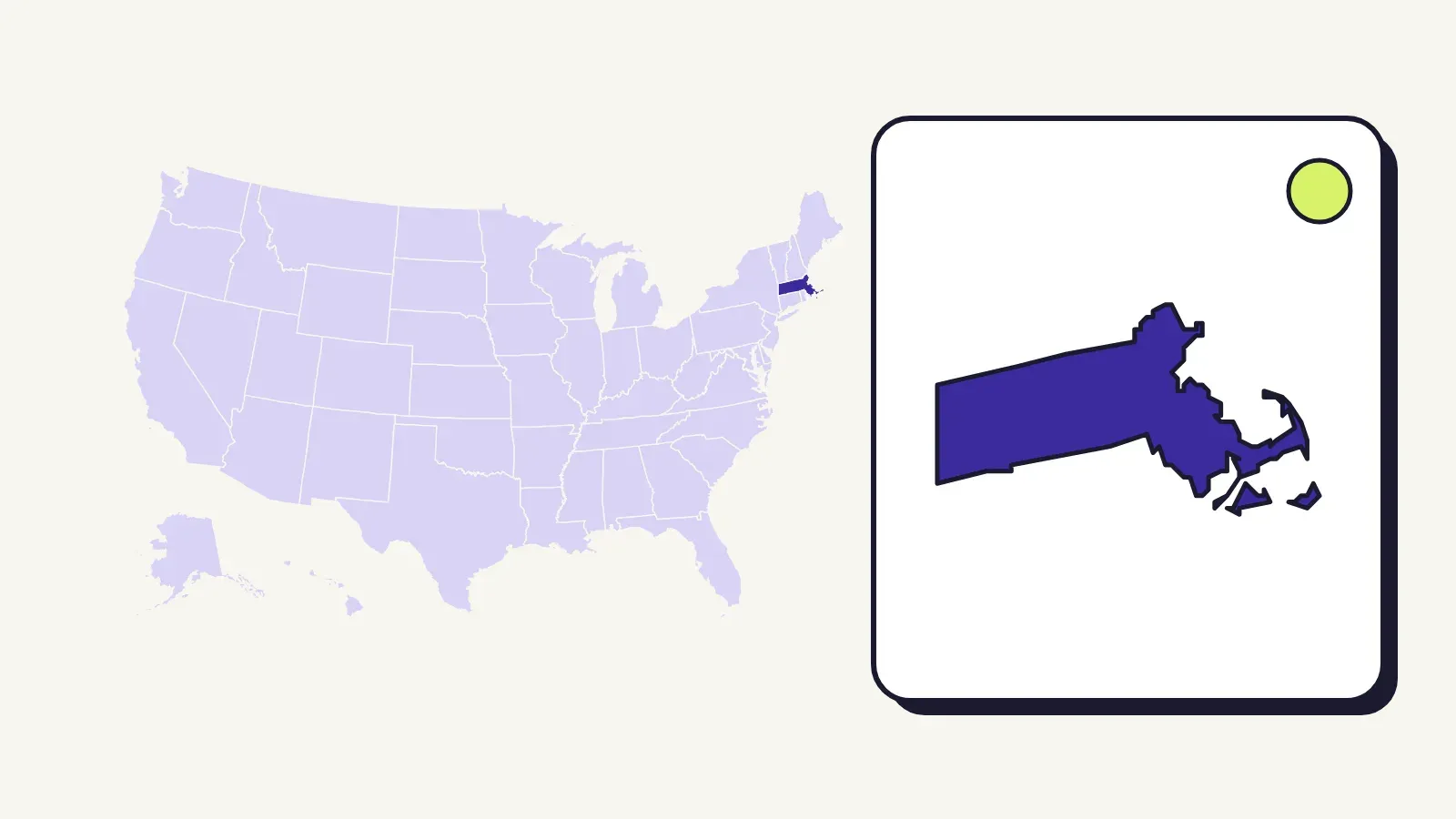
The short version
Lenders making loans of $6,000 or less at more than 12% a year need a small loan license from the Division of Banks, and they may charge no more than 23% a year plus a $20 administrative fee. The Division says that makes payday loans illegal here, and car title loans fall under the same limits. Creditors have six years to sue, and Massachusetts protects the greater of 85% of your gross wages or 50 times the minimum wage each week.
Massachusetts lending rules at a glance
Why payday loans are illegal here
Massachusetts doesn't name payday lending in a statute, but its rate limits make the product impossible. The Division of Banks says that any company or person engaged in small-dollar lending in Massachusetts must be licensed, and that a payday loan is illegal "due to the high annual percentage rate charged." The Division notes that payday loans average APRs of over 500%.
The same applies to car title loans. No Massachusetts law authorizes them, and a small loan secured by your car must stay within the limits below.
The small loan rate limit
Chapter 140, section 96 of the General Laws requires a small loan license to make loans of $6,000 or less when the interest and expenses exceed 12% a year. The Small Loans Regulatory Board sets the maximum rate, and its regulation, 209 CMR 26.01, allows:
- 23% a year on the unpaid balance of the amount financed;
- plus an administrative fee of $20 when the loan is made, no more than once in any 12 months;
- a returned-payment fee of up to $10, if the agreement allows it;
- no more than 6% a year once a loan is more than a year past its maturity date.
Larger loans have a different backstop. Under the criminal usury statute, chapter 271, section 49, charging more than 20% a year is a crime unless the lender has notified the Attorney General and keeps records open to inspection. A lender that has filed that notice can charge more, so read the APR on any offer rather than assuming it's under 20%.
For short-term cash, a credit union loan or a hardship plan with your creditor usually beats any high-cost option. See payday loan alternatives and how personal loans work.
Six years to sue, and limits on collectors
Massachusetts gives a creditor six years after a contract claim accrues to sue (chapter 260, section 2). That covers credit card debt and personal loans. Read how the statute of limitations works before you pay on an old account.
The Attorney General's debt collection regulations, 940 CMR 7.00, go beyond federal rules:
- A creditor may start no more than two calls, texts or recorded messages in each seven-day period to your home or personal phone for each debt.
- At other places, such as work, the limit is two contacts in each 30 days.
- A creditor collecting a debt it knows or should know is time-barred must tell you, in capital letters, that the debt may be too old for you to be sued on it in court.
For your federal rights under the FDCPA, see debt collectors and your rights.
Wage garnishment protects most of your pay
In Massachusetts, wage garnishment is called trustee process. Chapter 246, section 28 exempts the greater of 85% of your gross wages or 50 times the higher of the federal or state hourly minimum wage for each week. With the state minimum wage at $15 an hour, at least $750 a week is protected. Federal law protects only 75% of disposable earnings, so the state rule is far stronger. Divorce, separate maintenance and child support orders follow federal limits instead.
Checking a lender and filing a complaint
- Look up the license on NMLS Consumer Access before you apply. Small loan companies and debt collectors are licensed by the Division of Banks.
- Compare the APR on the disclosure with the 23% limit for loans of $6,000 or less.
- File a consumer complaint with the Division of Banks, or with the Attorney General's office for unfair collection practices. You can also file with the CFPB.
Common questions
Are payday loans legal in Massachusetts?
No. The Division of Banks says payday loans are illegal because of their high APR. Licensed small loans of $6,000 or less are capped at 23% a year plus a $20 administrative fee.
Are title loans legal in Massachusetts?
No law authorizes them. A small loan secured by a car must stay within the same 23% limit, so high-cost title lenders don't operate legally here.
What is the statute of limitations on credit card debt in Massachusetts?
Six years from when the claim accrues, usually when you defaulted. A collector seeking a time-barred debt must tell you it may be too old to sue on.
How much of my wages can be garnished in Massachusetts?
Massachusetts protects the greater of 85% of your gross wages or 50 times the higher minimum wage per week, which is $750 at $15 an hour.
Sources
- Massachusetts Division of Banks — Payday loans
- 209 CMR 26.00 — Small Loans Regulatory Board maximum rate (PDF)
- M.G.L. chapter 140, section 96 — Small loan license requirement
- M.G.L. chapter 271, section 49 — Criminal usury
- M.G.L. chapter 260, section 2 — Six-year limit on contract actions
- 940 CMR 7.00 — Attorney General debt collection regulations (PDF)
- M.G.L. chapter 246, section 28 — Wage exemption from trustee process
Facts on this page were checked against these sources on October 13, 2026. The protected weekly wage amount is based on the $15 Massachusetts minimum wage in effect since January 1, 2023.
Keep reading
-
Loan type
Payday loan alternatives
Credit union PALs up to $2,000 at 28% APR or less, paycheck advances, payment plans and local help.
-

Debt help
Debt collectors and your rights
Validation notices, the 30-day dispute window, the 7-calls-in-7-days rule and how to complain.
-
State law
Rhode Island
Payday loans up to $500 at a 10% fee until a 2025 law ends them on January 1, 2027; 10-year debt limit.