Payday banned
Borrowing in Nebraska: What State Law Allows
Nebraska voters capped payday loans at 36% APR, and the state's installment loan rules were reorganized in 2025. Here is what licensed lenders can charge now and what happens if you fall behind.
By Lendmira Editorial Team Updated 6 min read
- Payday loan APR cap
- 36%
- Installment loan rates
- 24% / 21% tiers
- Time limit, written contract
- 5 years
- Garnishment, head of family
- Up to 15% of pay
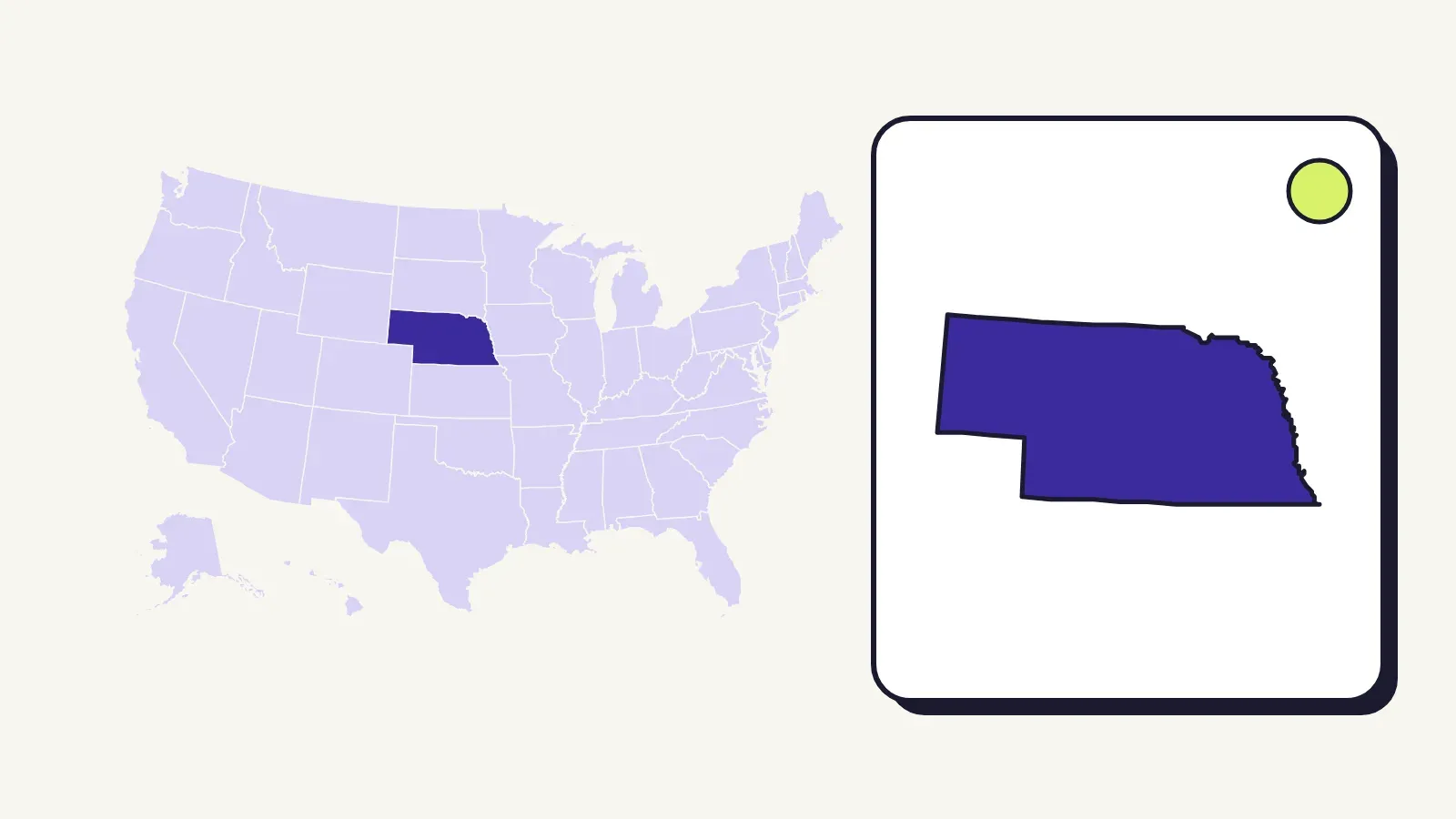
The short version
Nebraska caps payday loans, called delayed deposit transactions, at a 36% APR, and a loan above that is void. Licensed installment lenders may charge 24% a year on the first $1,000 and 21% on the rest. Creditors have five years to sue on a written contract and four on an unwritten one, and a head of family can have no more than 15% of disposable pay garnished.
Nebraska lending rules at a glance
The 36% limit on delayed deposit loans
Nebraska's Delayed Deposit Services Licensing Act still licenses payday-style lenders, but since Initiative 428 passed in 2020, section 45-918 says a licensee "shall not impose an annual percentage rate greater than thirty-six percent." The penalty is strong: a transaction that breaks the cap is void, and the lender can't collect principal, interest or fees on it.
- A lender may hold no more than $500 in checks from you at one time, and no more than two checks.
- It may not hold a check for more than 34 days.
- Renewals and rollovers are generally prohibited.
- It may not charge for loan brokerage, insurance or other add-on products.
At 36%, a $500 loan for a month costs about $15 in interest, which leaves little room for the traditional payday fee model. A lender that charges more under a Nebraska license is making a loan the law treats as void. Keep your agreement and payment records, and report it to the Department of Banking and Finance. If you need a small amount, start with payday loan alternatives such as a credit union payday alternative loan.
Installment loan rates after the 2025 rewrite
In 2025, LB474 folded the Nebraska Installment Loan Act into the renamed Nebraska Installment Loan and Sales Act. The rate tiers moved to section 45-349:
| Part of the unpaid principal | Maximum rate per year |
|---|---|
| First $1,000 | 24% |
| Amount above $1,000 | 21% |
A loan of $3,000 or less generally can't run longer than 36 months. If a lender violates the act, it can't collect interest or charges on the loan and must refund what it collected. Banks and their online partners may follow other rules, so compare the APR on each personal loan offer.
No title loan law
Nebraska has no statute authorizing car title lending of the kind sold in states like Missouri. A licensed installment lender that takes your car as collateral is still subject to the rate tiers above. An offer of a triple-digit title loan, online or by phone, is a reason to check the lender's license with the Department of Banking and Finance before you hand over your title or a spare key.
Four or five years to sue
Nebraska gives creditors five years to sue on an agreement, contract or promise in writing (Neb. Rev. Stat. 25-205) and four years on a contract not in writing (25-206). Credit card agreements are rarely signed the way a loan note is, so card debt may be treated as an unwritten contract with a four-year limit; a creditor holding a signed agreement may argue for five. If you're sued on an old account, raise the deadline in your answer. See how statutes of limitations work.
Garnishment and your paycheck
After a judgment, a creditor can garnish the lowest of: 25% of your weekly disposable earnings, the amount above 30 times the federal minimum wage, or 15% if you're the head of a family (Neb. Rev. Stat. 25-1558). On a weekly take-home pay of $800, for example, that's at most $120 for a head of family instead of $200. Support orders, Chapter 13 bankruptcy orders and tax debts follow different limits. For your rights before it gets that far, read debt collectors and your rights.
Checking a lender and making a complaint
- Search the license through the Nebraska Department of Banking and Finance or NMLS Consumer Access.
- Check the APR. On a payday-style loan from a Nebraska licensee, anything above 36% breaks the law.
- File a complaint with the Department online or through its consumer hotline at (877) 471-3445. Include copies of your agreement, receipts and any messages from the lender.
Common questions
Are payday loans legal in Nebraska?
Only at 36% APR or less. Delayed deposit lenders are still licensed, but a loan above 36% is void, and the lender can't collect principal, interest or fees.
Are title loans legal in Nebraska?
Nebraska has no law authorizing title loans. Licensed installment lenders are limited to 24% a year on the first $1,000 and 21% on the rest.
What is the statute of limitations on debt in Nebraska?
Five years for written contracts and four for contracts not in writing. Credit card cases often fall under the four-year period, but it depends on the paperwork.
How much can be garnished from my wages in Nebraska?
Up to 25% of disposable earnings, or 15% if you're the head of a family, and never more than the amount above 30 times the federal minimum wage.
Sources
- Nebraska Department of Banking and Finance — Delayed deposit services
- Neb. Rev. Stat. 45-918 — 36% APR limit
- Neb. Rev. Stat. 45-919 — Delayed deposit prohibited practices
- Neb. Rev. Stat. 45-349 — Installment loan rates
- Nebraska Legislature — LB474 (2025)
- Neb. Rev. Stat. 25-205 — Written contracts, five years
- Neb. Rev. Stat. 25-206 — Unwritten contracts, four years
- Neb. Rev. Stat. 25-1558 — Garnishment limits
Facts on this page were checked against these sources on October 13, 2026. Section 45-349 reflects LB474 (2025) and LB717 (2026).
Keep reading
-

Loan type
Payday loan alternatives
Credit union PALs up to $2,000 at 28% APR or less, paycheck advances, payment plans and local help.
-

Debt help
Old debt and time limits
Most states give collectors 3–6 years to sue. What can restart the clock, and why it's not the 7-year credit rule.
-
State law
Iowa
Payday checks capped at $500 for 31 days, title loans at 21%, and a 36% ceiling for regulated lenders.