Payday banned
Borrowing in Pennsylvania: What State Law Allows
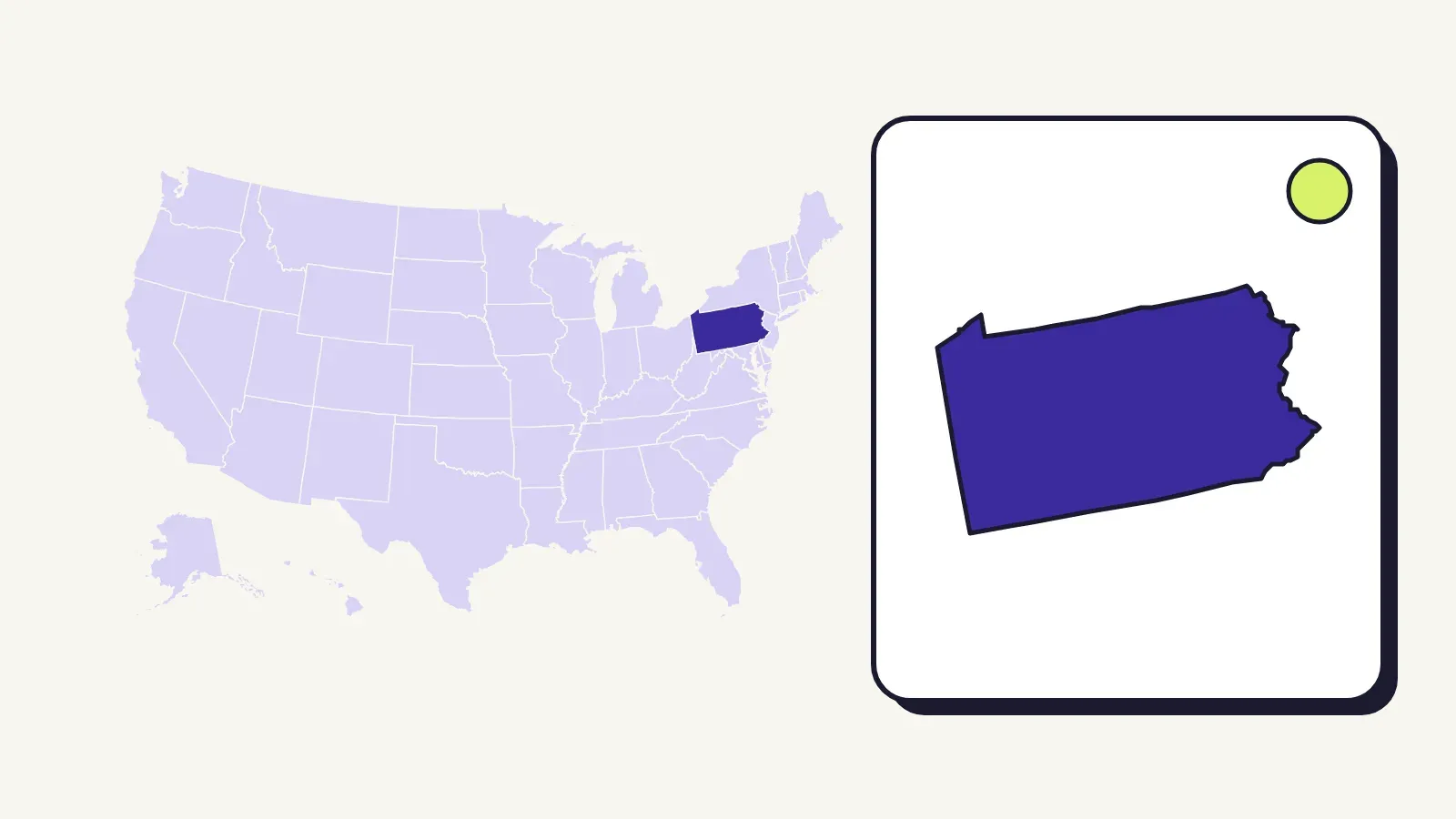
There are no legal payday or car title lenders in Pennsylvania, and the state goes further than most to protect your paycheck. Here is how the rules work and where online lenders cross the line.
By Lendmira Editorial Team Updated 6 min read
- Payday loans
- Not allowed
- Car title loans
- Not allowed
- Time limit to sue on debt
- 4 years
- Wage garnishment for card debt
- Not allowed
The short version
Pennsylvania has no law that authorizes payday or car title loans. Lenders that make small consumer loans above the state's usury limit need a license under the Consumer Discount Company Act, and the rates that law allows are far below payday pricing. A creditor generally has four years to sue on a debt, and wages held by your employer are exempt from garnishment for ordinary consumer debts.
Pennsylvania lending rules at a glance
Why payday lenders don't operate here
Pennsylvania never created a payday or deferred deposit license. Instead, two older laws do the work. The Loan Interest and Protection Law sets a low ceiling on interest for lenders without a special license, and the Consumer Discount Company Act (CDCA) lets licensed companies charge more, but only within its own limits. A storefront payday loan at triple-digit rates fits neither.
The Department of Banking and Securities (DoBS) has applied the CDCA to lenders outside the state that make loans to Pennsylvanians online, and state regulators have taken action against online lenders that charged triple-digit rates without a license, including companies that called their charges "fees" rather than interest. A loan that breaks these rules can expose the lender to refunds, and the Loan Interest and Protection Law lets borrowers who paid excess interest recover up to three times that amount.
Car title loans
The same limits rule out car title loans. No Pennsylvania law lets a lender take your vehicle title for a short-term, high-rate loan. If you buy a car on credit, that's a different transaction, covered by the motor vehicle sales finance rules in the Consumer Credit Code.
Who can make personal loans
Banks and credit unions
Chartered and supervised by state or federal regulators. Often the lowest-cost source of small personal loans.
Consumer discount companies
Finance companies licensed by DoBS under the CDCA to make non-mortgage consumer loans at rates above the usury limit.
Loan brokers
Anyone paid to arrange a loan or credit line for you must register with DoBS under the Credit Services Act.
Before you sign, look up the company in the PA Financial Institutions Search on the DoBS portal or on NMLS Consumer Access. A lender that isn't licensed and still charges a high rate is a red flag; see common loan scams. For a fair comparison of real offers, read how to compare loan offers.
Time limits on lawsuits and protection for your pay
Under 42 Pa.C.S. section 5525, most contract claims, written or not, must be filed within four years. That covers credit card debt and most personal loans. A collector can still contact you about an older debt, but you can raise the time limit as a defense in court. See how old debts and time limits work.
Pennsylvania is one of the few states that protect wages from garnishment for ordinary debts. Under 42 Pa.C.S. section 8127, wages, salaries and commissions held by your employer are exempt, with exceptions that include:
- Child support, and orders in divorce cases.
- Board (room and food) owed for four weeks or less.
- Judgments for a landlord on a residential lease, limited to 10% of net wages or less.
- Student loans under the Pennsylvania Higher Education Assistance Agency Act.
- Restitution, fines and costs ordered in a criminal case.
Federal debts such as unpaid taxes and defaulted federal student loans follow federal rules. Money already in a bank account is treated differently: a creditor with a judgment can try to garnish it.
Getting help or filing a complaint
- Call the DoBS Consumer Help Center at 1-800-PA-BANKS (722-2657) or file a complaint online about a lender, broker or check casher.
- Report deceptive practices to the Pennsylvania Attorney General's consumer protection office.
- Look for cheaper help. If you need cash quickly, start with payday loan alternatives such as a credit union loan or a payment plan.
Common questions
Are payday loans legal in Pennsylvania?
No. No state law authorizes them, and lenders that make consumer loans above the usury limit need a Consumer Discount Company Act license, whose rate limits rule out payday pricing. That applies to online lenders, too.
Can my wages be garnished in Pennsylvania for credit card debt?
No. Wages held by your employer are exempt for ordinary consumer debts. Exceptions include support, some landlord judgments, state student loans and criminal restitution.
What is the statute of limitations on debt in Pennsylvania?
Generally four years for contract claims, including credit card debt.
Who regulates lenders in Pennsylvania?
The Department of Banking and Securities licenses consumer discount companies, loan brokers and check cashers, and takes complaints about them.
Sources
- Pennsylvania Department of Banking and Securities — Non-bank licensees
- Pennsylvania Department of Banking and Securities — Consumer Help Center
- 42 Pa.C.S. section 5525 — Four-year limitation (Justia)
- 42 Pa.C.S. section 8127 — Personal earnings exempt from process (Justia)
Facts on this page were checked against these sources on October 13, 2026. A loan from a lender outside Pennsylvania is not automatically legal here; check that the company is licensed with DoBS.
Keep reading
-
Loan type
Payday loan alternatives
Credit union PALs up to $2,000 at 28% APR or less, paycheck advances, payment plans and local help.
-

Debt help
Debt collectors and your rights
Validation notices, the 30-day dispute window, the 7-calls-in-7-days rule and how to complain.
-
State law
Ohio
Short-term loans up to $1,000 at 28% plus a $30 monthly fee, 91 days to a year; no title loans; 6-year limit.