Payday banned
Borrowing in South Dakota: What State Law Allows
Voters capped consumer loan rates at 36% and payday and title lenders largely disappeared. Here is what the cap covers, what makes a loan void, and how much of your pay a creditor can take.
By Lendmira Editorial Team Updated 6 min read
- Rate cap, licensed lenders
- 36% a year
- Payday and title loans
- Effectively banned
- Time limit to sue on debt
- 6 years
- Max wage garnishment
- 20% of disposable pay
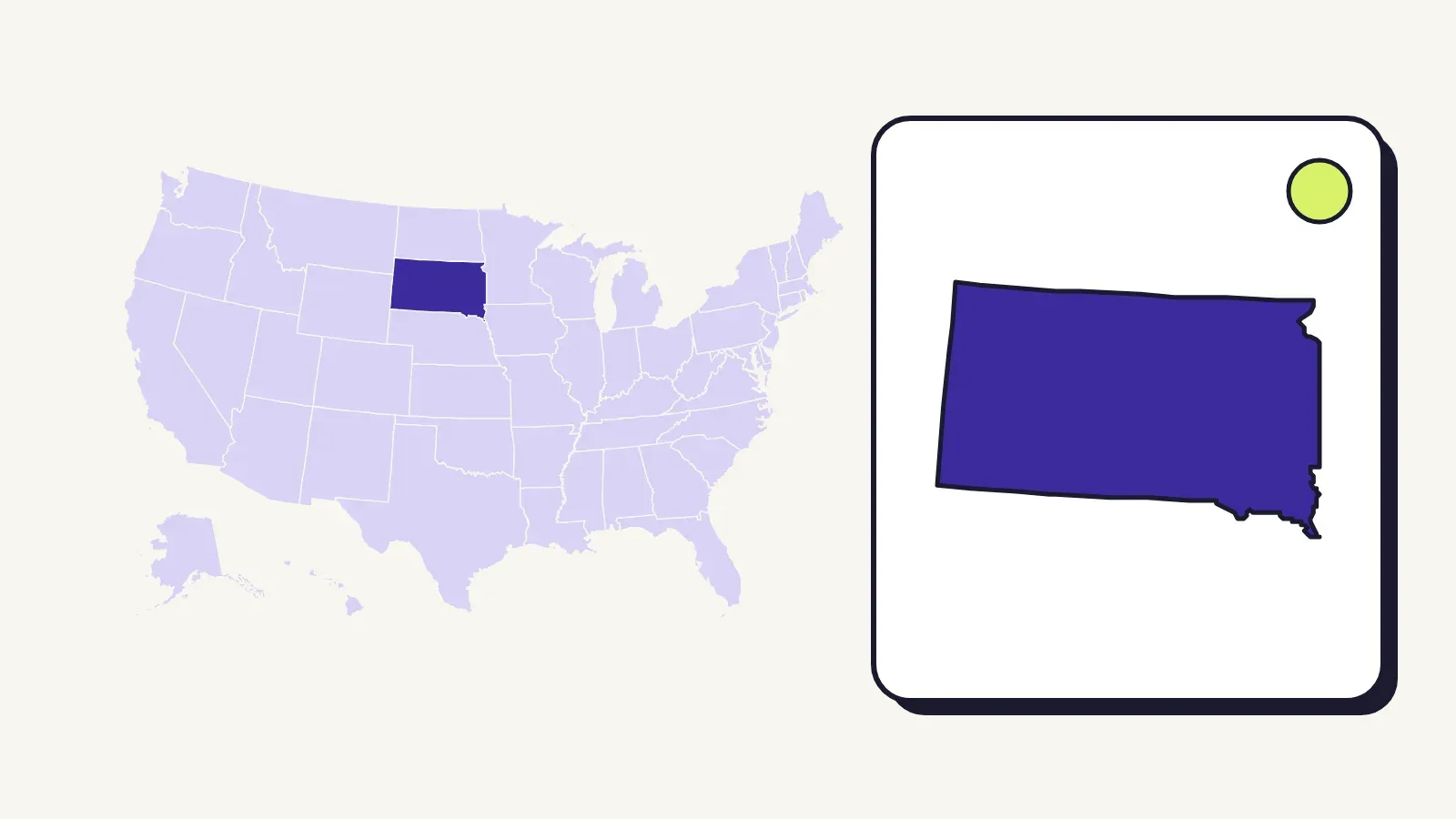
The short version
South Dakota's licensed money lenders can't charge more than 36% a year in total finance charges, a limit set by Initiated Measure 21. A loan that breaks it is void and uncollectible, which priced payday and car title loans out of the state. Creditors generally have six years to sue, and garnishment is limited to 20% of disposable earnings, less for workers with dependents.
South Dakota lending rules at a glance
What the 36% cap covers
Non-bank lenders that make consumer loans in South Dakota need a money lender license from the Division of Banking. Since Initiated Measure 21, approved by voters in 2016, section 54-4-44 of the codified laws bars a licensee from charging finance charges above an annual rate of 36%.
- Everything counts. The cap includes charges for add-on products or services and any other fee tied to extending credit, not just interest.
- Breaking it voids the loan. The lender can't collect principal, interest or fees, and the violation is a Class 1 misdemeanor.
- No workarounds. Section 54-4-44.1 bans any device, subterfuge or pretense to evade the cap, including loans arranged by mail, phone or internet by a lender with no office in the state.
What happened to payday and title loans
South Dakota's code still has sections on payday and title loans, including a rollover limit for short-term loans and rules for holding a car title. But they apply only to licensees, and every licensee is bound by the 36% cap. A two-week payday loan with a typical flat fee, or a 30-day title loan with monthly fees, can't fit under that limit, so licensed lenders no longer offer the traditional products. Lower-cost installment loans that stay at or under 36% are still legal.
A title loan at 36% or less is still a loan secured by your car: if you default, the lender can repossess it. Compare options such as credit union small-dollar loans first; see payday loan alternatives.
Banks, card issuers and other exceptions
The 36% cap applies to licensed money lenders. Banks, credit unions and other entities exempt from the licensing chapter follow their own rules, so a bank loan or credit card can be priced differently. Business-to-business lending is exempt, and loans to buy a motor vehicle have their own section on which fees may be charged. If you aren't sure whether a lender needs a license, ask the Division of Banking before you sign.
For a personal loan, the cap is only a ceiling. Borrowers with strong credit can usually do much better; see what rates look like at fair credit and other score ranges.
Suits over old debts and wage garnishment
Under section 15-2-13, a creditor has six years to sue on a contract, express or implied. That generally covers credit card balances and personal loans. A payment or written promise to pay can affect when the clock starts, so check the dates before you send money. See how statutes of limitations work before you respond to a collector about an old account.
After a judgment, section 21-18-51 limits garnishment to the lesser of 20% of your disposable earnings for the week or the amount above 40 times the federal minimum hourly wage, reduced by $25 a week for each dependent family member living with you. That protects more than the federal floor of 25% and 30 times the minimum wage. The limits don't apply to court-ordered support.
Checking a lender and filing a complaint
- Confirm the license through the Division of Banking or NMLS Consumer Access before you apply.
- Check the APR on the disclosure. Every finance charge counts toward the 36% cap, including add-on products.
- Complain to the Division of Banking through its consumer complaints page if a lender charges more than 36% or isn't licensed.
Common questions
Are payday loans legal in South Dakota?
Licensed lenders can't charge more than 36% a year in total finance charges, so traditional payday loans aren't offered. A loan that breaks the cap is void.
Are title loans legal in South Dakota?
Only at 36% a year or less. The 36% cap applies to title lenders as well, which ended high-rate title lending.
What is the statute of limitations on debt in South Dakota?
Six years for contract claims, including most credit card and loan debt.
How much of my paycheck can be garnished in South Dakota?
No more than 20% of disposable earnings, or the amount above 40 times the federal minimum wage if that's less, reduced by $25 a week per dependent.
Sources
- South Dakota Codified Laws section 54-4-44 — Maximum finance charge for licensees
- South Dakota Codified Laws chapter 54-4 — Money lenders, including anti-evasion and title loan sections
- South Dakota Codified Laws section 15-2-13 — Six-year limitation
- South Dakota Codified Laws section 21-18-51 — Wage garnishment limits
- South Dakota Division of Banking
Facts on this page were checked against these sources on October 13, 2026. The 36% cap binds licensed money lenders; banks and other exempt lenders follow different rules.
Keep reading
-
Loan type
Payday loan alternatives
Credit union PALs up to $2,000 at 28% APR or less, paycheck advances, payment plans and local help.
-
Debt help
Old debt and time limits
Most states give collectors 3–6 years to sue. What can restart the clock, and why it's not the 7-year credit rule.
-
State law
North Dakota
Payday loans up to $500 with a 20% fee and 60-day limit; no title loans; 36% cap on other licensed loans.