Payday allowed
Borrowing in Utah: What State Law Allows
Utah is one of the few states with no general ceiling on interest rates. That makes the rules it does have, on timing, payment plans and repayment ability, the main protections you get.
By Lendmira Editorial Team Updated 6 min read
- Payday loans
- Allowed, no fee cap
- Payday interest stops after
- 10 weeks
- Time limit to sue on a contract
- 6 years
- Max wage garnishment
- 25% of take-home pay
The short version
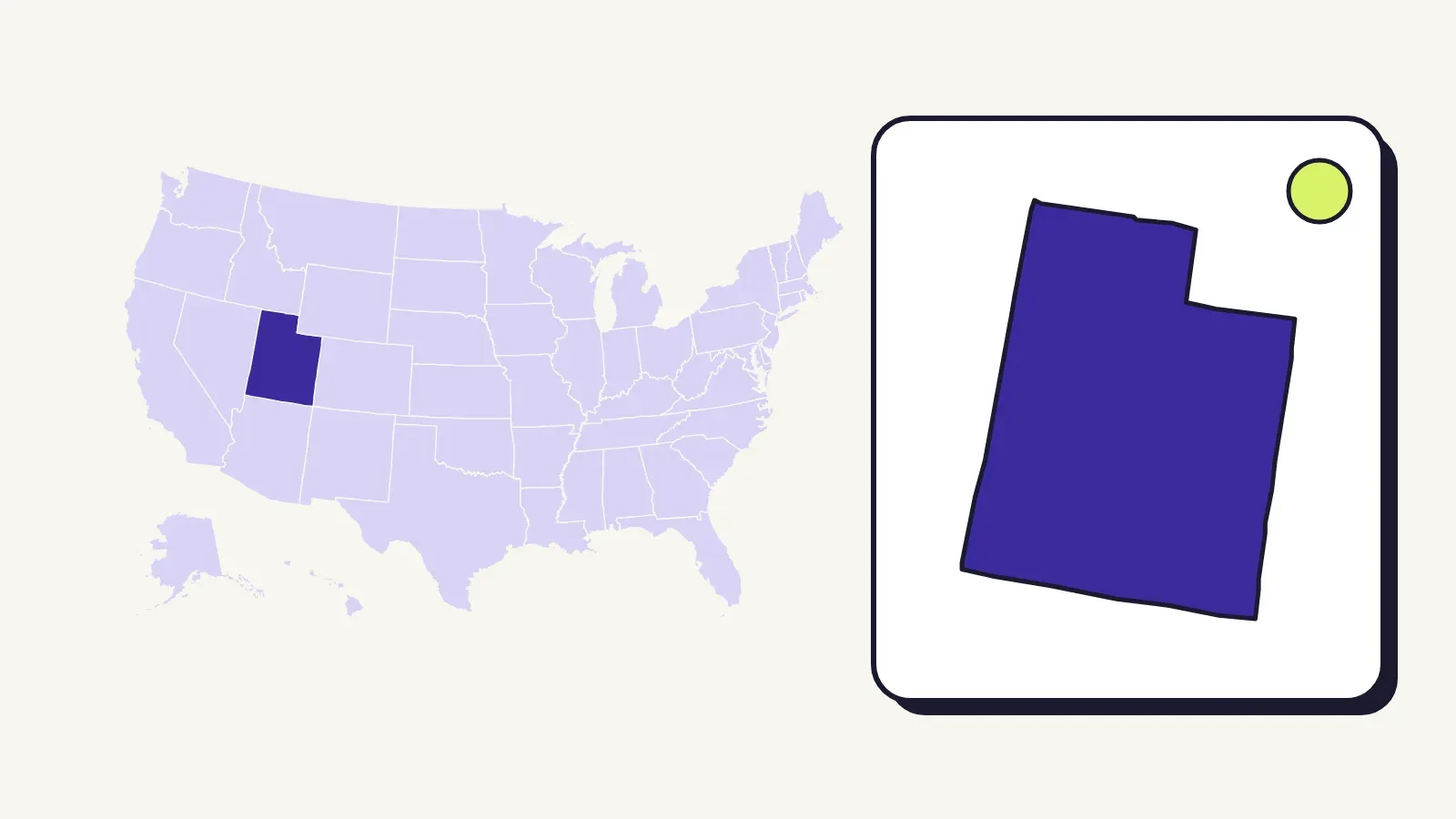
Utah law lets lenders and borrowers agree to any interest rate, so payday (deferred deposit) and car title loans are legal and their prices are not capped. Payday lenders must stop charging interest 10 weeks after the loan is made and must offer an interest-free extended payment plan. A creditor generally has six years to sue on a written contract, and a judgment creditor can take up to 25% of your disposable earnings.
Utah lending rules at a glance
Why Utah has no rate ceiling
Under Utah Code section 15-1-1, the parties to a lawful contract "may agree upon any rate of interest." The 10% legal rate in the same section applies only when a contract doesn't name a rate. The Utah Department of Financial Institutions (DFI) puts it plainly: Utah law does not specify an interest rate ceiling.
What remains is a ban on unconscionable terms in the Utah Consumer Credit Code. That is a case-by-case argument you would raise in court, not a number a lender has to stay under. In practice, the price of a loan in Utah is whatever the lender offers and you accept, so comparing offers matters more here than in most states. Our guide to comparing loan offers shows how to line them up by APR and total cost.
The rules payday lenders must follow
Payday lenders register with DFI as deferred deposit lenders under Title 7, Chapter 23 of the Utah Code. The statute sets no maximum loan amount and no fee cap, but it does limit how long the cost can keep growing:
- 10-week limit. A lender may not collect more interest on a loan still unpaid 10 weeks after it was made, and a rollover can't push the due date past that point.
- Rollovers only if you ask. The lender can't roll a loan over on its own initiative, or pay off one loan with the proceeds of another to get around the limits.
- Extended payment plan. After 10 weeks of interest, you can ask for a plan of at least four equal payments with no new interest or fees, once in any 12-month period.
- Ability to repay. The lender must check that you can repay, using a credit report, proof of income or your history with it. You sign a statement saying you can repay.
- Free cancellation. You can cancel without charge by returning the money by 5 p.m. on the next business day.
- Notice before a lawsuit. Since 2020, a lender must give you at least 30 days' notice of default before suing.
Car title loans
Title lenders register with DFI under the Title Lending Registration Act. As with payday loans, there is no rate cap. Section 7-24-202 sets these limits instead:
- The loan can't be more than the vehicle's fair market value.
- Only one title loan at a time on the same vehicle.
- The lender must consider your income, obligations and employment, though your signed statement that you can repay satisfies this.
- Fees and interest must be disclosed in dollars and as an APR, in writing and out loud before you sign.
- No rollover unless you request it.
Miss payments and you can lose the car. Before you sign, compare alternatives to payday and title loans, such as a credit union small-dollar loan or a payment plan with the bill you're trying to cover.
Time limits and garnishment if you fall behind
Utah gives a creditor six years to sue on a written contract, the period the Utah courts' own answer form cites for debt cases. Oral contracts and open accounts for goods have a four-year limit. Credit card debt is usually treated as a written contract, so plan on six years, but if you're sued on an old card debt, it is worth asking whether the shorter period applies. See how statutes of limitations work before you pay anything on an old account.
After a judgment, Rule 64D of the Utah Rules of Civil Procedure limits wage garnishment for ordinary debts to the lesser of 25% of disposable earnings or the amount above 30 times the federal minimum wage for each week of the pay period. That matches the federal floor; Utah does not protect more. Child support orders can take up to 50%.
Checking a lender and complaining
- Confirm the registration with DFI or on NMLS Consumer Access. Deferred deposit and title lenders must be registered to lend in Utah.
- Ask for the total cost in dollars and the APR, plus the date the full amount is due.
- Request the extended payment plan in writing if you can't repay after 10 weeks of interest.
- File a complaint with DFI at (801) 538-8830 or through its website, and with the CFPB if the lender is abusive or won't follow the rules. Know your rights with debt collectors too.
Common questions
Is there a maximum interest rate on loans in Utah?
No. Utah lets the parties agree to any rate. Only the general ban on unconscionable terms and the rules for specific loan types limit what a lender can do.
Are payday loans legal in Utah?
Yes. Deferred deposit lenders must register with the Department of Financial Institutions. They can't charge interest after 10 weeks and must offer a no-fee extended payment plan once a year.
How long can a creditor sue me for a debt in Utah?
Six years for a written contract and four years for oral contracts and open accounts. Most credit card cases fall under the six-year period.
How much of my paycheck can be garnished in Utah?
For ordinary debts, the lesser of 25% of your disposable earnings or the amount above 30 times the federal minimum wage per week. Support orders can take more.
Sources
- Utah Department of Financial Institutions — Interest rates
- Utah Code 15-1-1 — Interest rates (Utah Legislature)
- Utah Code Title 7, Chapter 23, Part 4 — Deferred deposit lending requirements
- H.B. 319 (2020) — Deferred deposit lending amendments, enrolled
- Utah Code 7-24-202 — Title loan operational requirements
- Utah Rules of Civil Procedure, Rule 64D — Writ of garnishment
- Utah State Courts — Debt collection answer form
- NCSL — Payday loans 2025 legislation (status of Utah S.B. 329)
Facts on this page were checked against these sources on October 13, 2026. Because Utah caps neither payday nor title loan prices, the APR on your disclosure is the number to compare.
Keep reading
-
Loan type
Payday loan alternatives
Credit union PALs up to $2,000 at 28% APR or less, paycheck advances, payment plans and local help.
-

Debt help
Old debt and time limits
Most states give collectors 3–6 years to sue. What can restart the clock, and why it's not the 7-year credit rule.
-
State law
Idaho
Payday loans up to $1,000 with no fee cap and a yearly no-fee payment plan; 5-year limit on written debts.