Payday allowed
Borrowing in Wisconsin: What State Law Allows
Wisconsin licenses payday and car title lenders but doesn't cap what they charge before a loan comes due. The protections are about size, refinancing, repayment plans and what happens to your car.
By Lendmira Editorial Team Updated 7 min read
- Payday loans
- Allowed, no rate cap
- Max payday debt
- $1,500 or 35% of income
- Max title loan
- 50% of car's value
- Max wage garnishment
- 20% of take-home pay
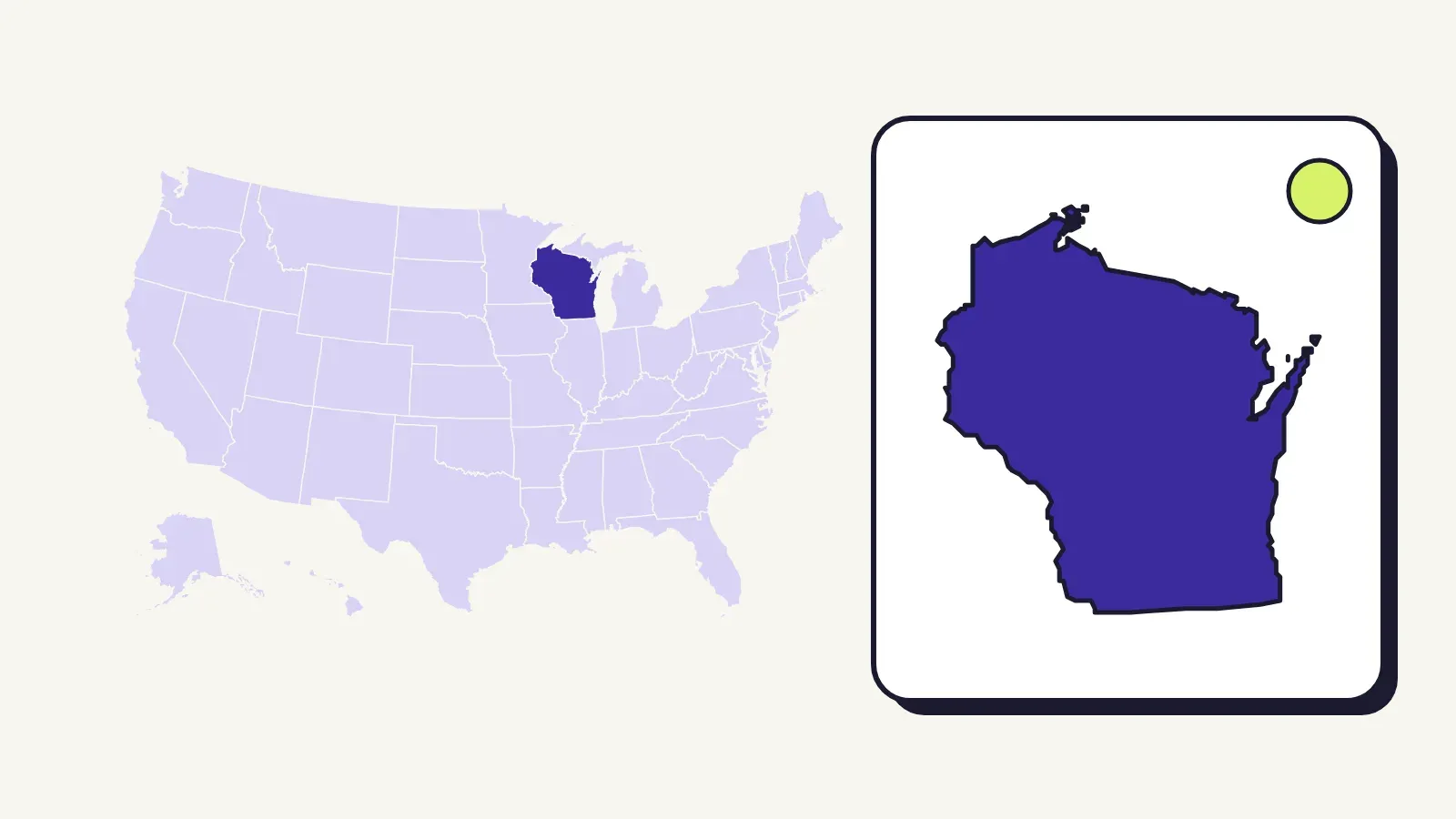
The short version
Wisconsin allows payday loans up to the lesser of $1,500 or 35% of your gross monthly income across all lenders, and title loans up to $25,000 but no more than half the car's retail value. Neither has an interest cap before the due date. After maturity, interest is limited to 2.75% a month. Debt lawsuits generally must be filed within six years, and garnishment is limited to 20% of disposable earnings, or nothing if your household is below the poverty line.
Wisconsin lending rules at a glance
Payday loans under section 138.14
Payday lenders need a license from the Department of Financial Institutions (DFI). A payday loan is one with a term of 90 days or less, and the statute says outright that it "imposes no limit on the interest" a lender may charge before the maturity date. What it does limit:
- Size: your total payday debt to all licensees can't exceed $1,500 or 35% of your gross monthly income, whichever is less.
- Refinancing: you may pay off a payday loan with one new payday loan, but not pay off that second loan with a third. Paying one loan and taking another within 24 hours is treated as proof of a violation.
- After the due date: interest is capped at 2.75% a month on the unpaid balance.
- Database: lenders check a statewide database before each loan, and it tells them only whether you're eligible.
With no rate cap, a short loan can cost hundreds of percent APR. Before you borrow, look at alternatives to payday loans; federal credit unions are held to an 18% APR ceiling on most loans through September 10, 2027.
The four-payment plan
If you can't repay in full when the term ends, the lender that made the loan must offer to let you repay the balance in four equal installments timed to your paydays. Once you've been offered a plan, no lender has to offer you another for 12 months, so use it when it's the right moment, and ask for it before you consider rolling the loan into a new one.
Car title loans under section 138.16
How much
Up to $25,000, and never more than 50% of the vehicle's retail value.
How long
The original term can be no longer than six months.
What it costs
No interest cap before maturity; up to 2.75% a month after it.
Changing your mind
Return the money by close of business the next business day to cancel, with no fee.
Before repossessing, the lender must give you written notice at least 20 days ahead, unless you surrender the car. If it sells the vehicle, it must return any surplus above what you owe, and you generally aren't liable for a shortfall unless you damaged or hid the car, pledged one with another lien, or sold it without consent.
Other licensed lenders
Wisconsin's general interest rule allows $12 per $100 a year on the declining balance unless another statute authorizes more. A lender needs a DFI license to make consumer loans with a finance charge above 18% a year, and licensed installment lenders can charge more than that. Shop by APR and total cost: our guide to comparing loan offers shows how.
Lawsuits and garnishment
Wisconsin's limit for contract lawsuits, including credit card and loan debt, is six years. Check the dates before you pay anything on an old account; see how statutes of limitations work.
Under section 812.34, 80% of your disposable earnings are exempt from garnishment, so no more than 20% can be taken. If your household income is below the federal poverty line, your earnings are completely exempt, and garnishment can never take your household below that line. If 80% still isn't enough to cover necessities, you can ask the court for more relief.
Complaints
- Look up the license on NMLS Consumer Access. Wisconsin payday and title lenders must keep their licenses there.
- Contact DFI at (608) 261-7578 or DFI_LFS@dfi.wisconsin.gov about a licensed lender.
- Report collection abuse to DFI's Bureau of Consumer Affairs, which administers the Wisconsin Consumer Act, or to the CFPB. Know your rights with debt collectors.
Common questions
Are payday loans legal in Wisconsin?
Yes, from DFI-licensed lenders. Total payday debt is limited to $1,500 or 35% of gross monthly income, whichever is less, and there's no interest cap before the due date.
How much can I borrow with a title loan in Wisconsin?
Up to $25,000, but no more than 50% of the car's retail value, for an original term of no more than six months.
What is the statute of limitations on debt in Wisconsin?
Six years for contract claims, which covers most credit card and loan debt.
Can my wages be garnished in Wisconsin?
Yes, up to 20% of disposable earnings after a judgment. If your household income is below the poverty line, your earnings are fully exempt.
Sources
- Wisconsin DFI — Payday lenders
- Wis. Stat. § 138.14 — Payday loans (Wisconsin Legislature)
- Wis. Stat. § 138.16 — Title loans (Wisconsin Legislature)
- Wis. Stat. ch. 138 — Money and rates of interest (PDF)
- Wis. Stat. ch. 812 — Garnishment, including § 812.34 (PDF)
- NCSL — Payday lending state statutes
Facts on this page were checked against these sources on October 13, 2026. A 2023 bill (SB 832) to require longer installment payday loans did not advance past committee.
Keep reading
-
Loan type
Payday loan alternatives
Credit union PALs up to $2,000 at 28% APR or less, paycheck advances, payment plans and local help.
-
Debt help
Old debt and time limits
Most states give collectors 3–6 years to sue. What can restart the clock, and why it's not the 7-year credit rule.
-
State law
Minnesota
Small loans capped at a 50% all-in APR, with ability-to-repay checks above 36%; 6-year limit on suits.